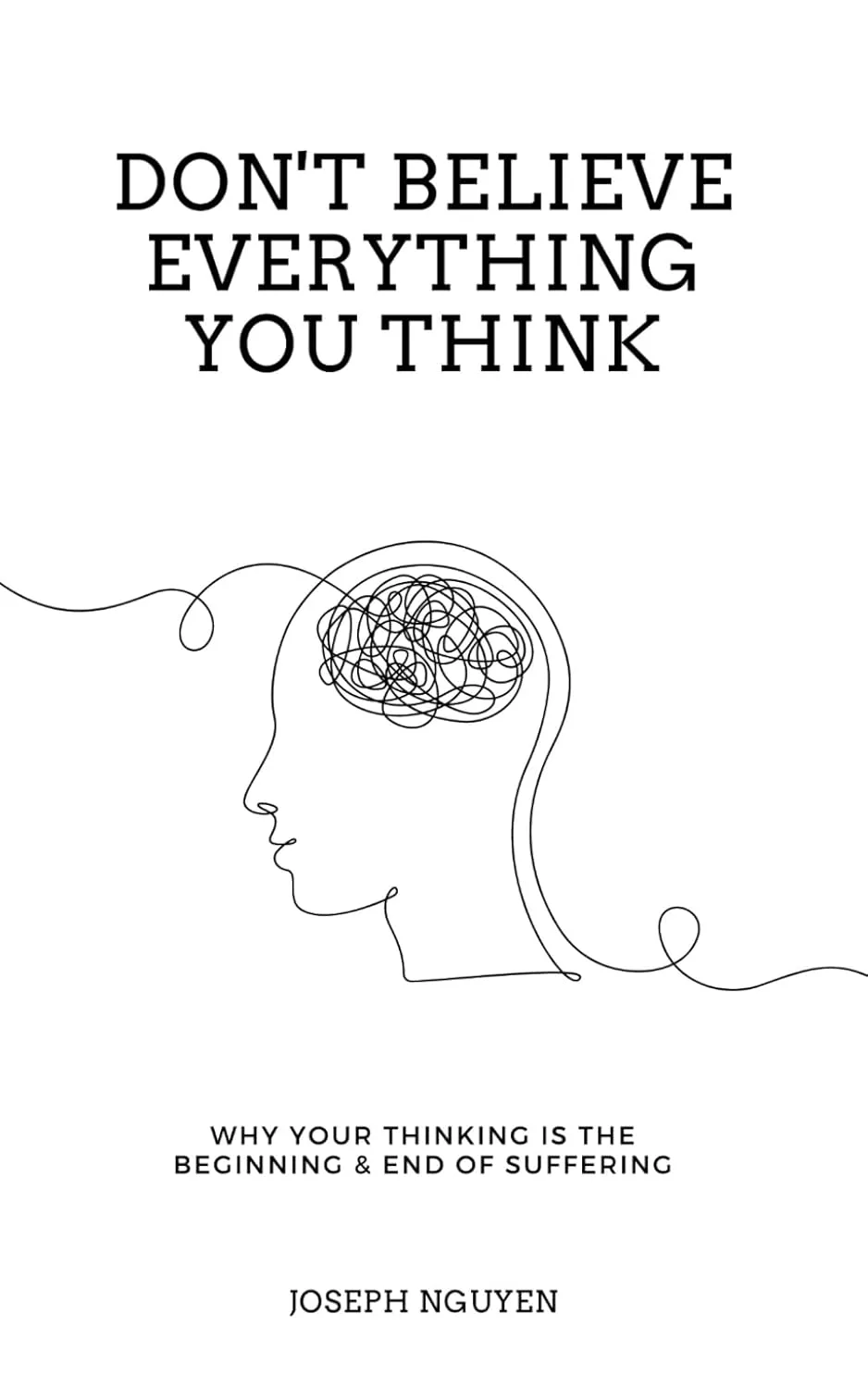
My Personal Experience with the Book
I’ve always been a chronic overthinker. If there is a way to spiral about a work email or a weird social interaction from three years ago, I will find it. When I kept seeing Don't Believe Everything You Think by Joseph Nguyen popping up in my feed, I was skeptical. Most self-help books are just fluff filled with flowery language that doesn't actually give you tools to use. However, I decided to grab it on Amazon and see if it could actually help me get out of my own head.
The first thing I noticed is how short the book is. It isn't a 400-page slog; it’s a direct, punchy read that gets straight to the point. The central premise—that our suffering comes from the stories we tell ourselves rather than reality itself—isn't entirely new if you've read about Stoicism or mindfulness, but Nguyen explains it in a way that felt accessible to me for the first time.
What I Liked
- Simplicity: The concepts are easy to grasp. There’s no complex jargon. It’s just "here is how your brain works, and here is how to stop letting your thoughts bully you."
- Actionable Framework: The book gives you a framework to pause when you start feeling anxious. It taught me to identify when I’m "thinking" vs. when I’m actually in the present moment.
- Brevity: You can finish this in a weekend. I prefer books that don't waste my time with unnecessary stories.
What Annoyed Me
It wasn't perfect. At times, the book felt a bit repetitive. The author makes his point very early on, and while he elaborates, I felt like I had the main takeaway by chapter four. Also, if you’re looking for deep psychological research or heavy scientific citations, this isn't that book. It’s more of a philosophical guide or a handbook for mental reframing. If you want to see what others paid for it and read their experiences, you’ll see similar feedback about it being concise but slightly repetitive.
Is It Worth Your Money?
After a few weeks of trying to apply the "don't believe your thoughts" logic, I actually noticed a shift. I still have anxious moments, but I recover faster. Instead of identifying with the fear, I can label it as "just a thought" and move on. That shift alone was worth the price of the book for me.
If you're someone who is constantly overwhelmed by your own mind, this is a solid buy. It cuts through the noise. However, if you are struggling with deep-seated clinical depression or trauma, this book is not a substitute for professional therapy. It’s a tool for mindset, not a cure-all for mental health crises.
Who Should Buy This
- People who feel overwhelmed by daily stress and overthinking.
- Readers who want a quick, easy read that they can actually apply immediately.
- Anyone interested in mindfulness or cognitive reframing techniques.
Who Should Skip It
- People looking for a dense, scientific exploration of the brain.
- Readers who prefer long, narrative-driven memoirs rather than "how-to" guides.
- Those who have already consumed a lot of Eckhart Tolle or similar authors, as you might find the concepts redundant.
Overall, I'm glad I picked it up. It’s one of those books that sits on my nightstand now for when I need a quick perspective shift. If you are ready to stop letting your brain run the show, you should check today's price and see if it's the right fit for your bookshelf.