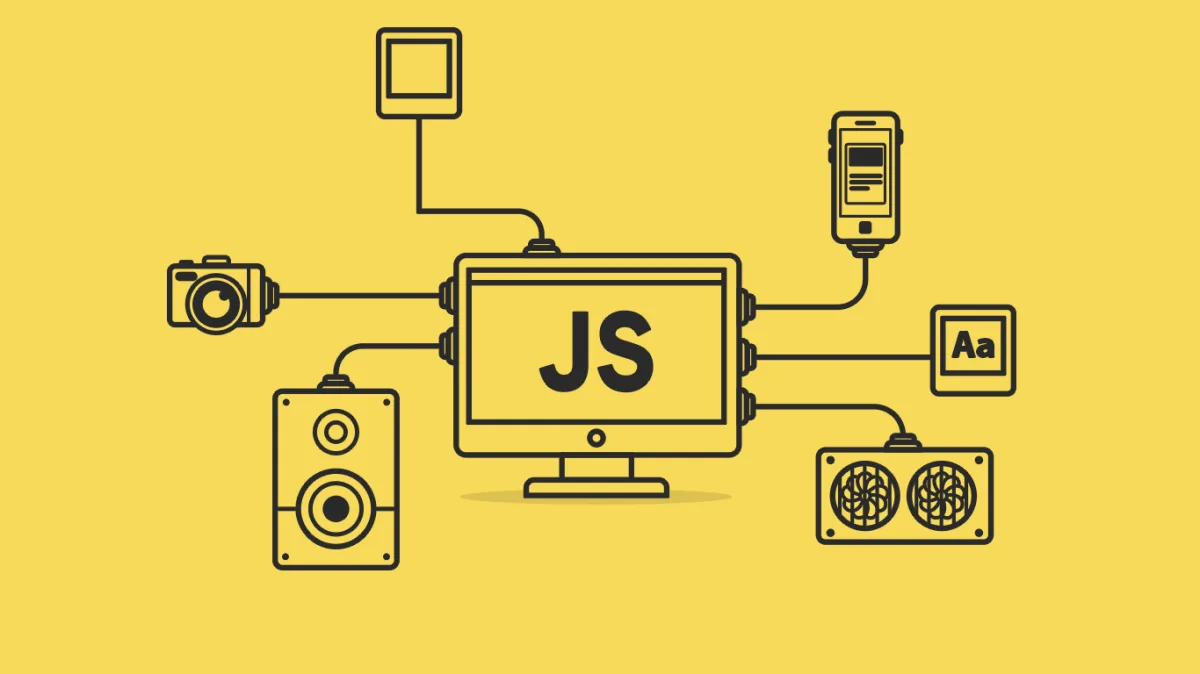
You’ve heard the buzz: JavaScript is everywhere. From powering the interactive front-end of virtually every website you visit to driving back-end servers, mobile apps, and even desktop applications, its influence is undeniable. If you’re looking to break into web development or simply add a powerful skill to your toolkit, learning JavaScript is a non-negotiable step. But can you truly learn JavaScript in 30 days? It’s an ambitious goal, but with a structured, disciplined approach and the right roadmap, it’s absolutely achievable. This isn't about becoming an expert in a month, but about building a solid foundation that empowers you to create and grow. Let’s dive into How to Learn JavaScript in 30 Days: The Ultimate Beginner’s Roadmap.
Why JavaScript is Your Most Valuable Skill (And Why Now is the Time to Learn)
JavaScript isn't just another programming language; it's the language of the web. Its versatility means it’s not confined to a single domain. You'll find it shaping user interfaces, orchestrating server-side logic with Node.js, building cross-platform mobile apps using frameworks like React Native, and even powering desktop applications via Electron. This ubiquity translates directly into high demand in the job market.
Consider the data: according to a recent Stack Overflow Developer Survey, JavaScript consistently ranks as the most commonly used programming language. This sustained popularity fuels a robust job market. Entry-level JavaScript developers in the U.S. can expect to earn an average annual salary around $70,000, with experienced professionals commanding significantly more. That’s a compelling reason to invest your time.
A structured 30-day approach cuts through the noise. It provides a clear path, preventing you from getting lost in the vast ocean of resources. You’ll build momentum daily, turning what feels like a daunting task into a series of manageable, rewarding steps. This roadmap isn't just about learning syntax; it's about building a developer's mindset.
The 30-Day Blueprint: Weeks 1 & 2 – Foundations and Control Flow
Your first two weeks are all about establishing a rock-solid understanding of JavaScript's core principles. Don't rush these fundamentals; they're the building blocks for everything you'll do later. Consistency is key here. Dedicate at least 2-3 hours daily to learning and coding.
Week 1: Core Concepts & Syntax
This week focuses on getting comfortable with the very basics of JavaScript. You'll learn how to store information and perform simple operations.
- Days 1-2: Introduction to Variables and Data Types. Understand
var,let, andconst. Explore primitive data types: strings, numbers, booleans, null, undefined, and symbols. Practice declaring variables and assigning values. - Days 3-4: Operators. Learn arithmetic (+, -, *, /), assignment (=, +=), comparison (==, ===, <, >), and logical (&&, ||, !) operators. Write small scripts to test different operations.
- Days 5-6: Basic Input/Output & Console. Get familiar with
console.log()for displaying output and debugging. Understand how to interact with the browser's developer console. - Day 7: Simple DOM Introduction. What is the Document Object Model? Learn how JavaScript interacts with HTML. Practice selecting elements by ID or tag name (e.g.,
document.getElementById()).
By the end of Week 1, you should be able to write small scripts that declare variables, perform calculations, and display results in the console or on a basic HTML page.
Week 2: Logic & Structure
Now you’ll start making your code smarter, allowing it to make decisions and repeat actions. This is where programming truly starts to feel powerful.
- Days 8-9: Conditional Statements. Master
if,else if, andelsestatements. Understand theswitchstatement for multiple conditions. Practice writing decision-making logic. - Days 10-11: Loops. Learn
for,while, anddo-whileloops. Understand when to use each for repetitive tasks. Practice iterating over sequences. - Days 12-13: Functions. Define and call functions. Explore function declarations, expressions, and arrow functions. Understand parameters and return values. Functions are crucial for organizing your code.
- Day 14: Arrays and Basic Array Methods. Learn how to store collections of data in arrays. Practice adding, removing, and accessing elements. Explore basic methods like
push(),pop(),shift(),unshift(), andlength.
You’ll now be able to write programs that can respond to different conditions, repeat actions, and organize code into reusable blocks. This is a significant leap in your journey to learn JavaScript in 30 days.
Accelerating Your JavaScript Learning: Weeks 3 & 4 – Objects, Async, and Projects
The second half of your 30-day journey accelerates into more complex topics, crucial for building dynamic web applications. You’ll move beyond isolated scripts and start working with real-world data and interactions.
Week 3: Deeper Dive into Data & Interaction
This week focuses on more complex data structures and robust interaction with web pages.
- Days 15-16: Objects. Understand objects as key-value pairs. Learn to create, access, and modify object properties and methods. Explore object literal syntax.
- Days 17-18: Advanced DOM Manipulation. This is where your websites come alive. Learn to select elements more precisely (
querySelector,querySelectorAll), change their HTML content (innerHTML,textContent), modify styles (styleproperty), and manipulate attributes. - Days 19-20: Event Listeners. Crucial for interactive web pages. Learn to respond to user actions like clicks, key presses, and form submissions using
addEventListener(). Practice building simple interactive elements like a button that changes text. - Days 21: Higher-Order Array Methods. Dive into powerful array methods like
map(),filter(), andreduce(). These are indispensable for efficient data transformation and manipulation.
Week 4: Asynchronous JS & Project Application
The final week introduces asynchronous programming, a cornerstone of modern web development, and culminates in building a small project to solidify your knowledge.
- Days 22-23: Asynchronous JavaScript (Callbacks & Promises). Understand why asynchronous code is necessary (e.g., fetching data from a server). Learn about callbacks and the concept of Promises (
.then(),.catch(),.finally()) for handling asynchronous operations more cleanly. - Days 24-25: Async/Await & Fetch API. Master
async/awaitfor writing asynchronous code that looks and feels synchronous. Use theFetch APIto make HTTP requests and retrieve data from external APIs (e.g., a weather API, a public to-do API). - Days 26-28: Build a Small Project. This is your capstone. Choose a simple project idea – a basic to-do list, a weather app, a simple calculator, or a quote generator. Apply everything you’ve learned: variables, functions, DOM manipulation, event listeners, and fetching data.
- Days 29-30: Debugging and Review. Learn to use browser developer tools effectively for debugging. Review challenging concepts, revisit your project, and identify areas for further study. Refactor your project code for better readability and efficiency.
Completing a project is an immense confidence booster. It shows you can apply theoretical knowledge to practical problems, a key skill for any developer.
Essential Tools and Mindset for Learning JavaScript in 30 Days
Having the right tools and, more importantly, the right mindset, makes all the difference in achieving your goal to learn JavaScript in 30 days.
Crucial Tools for Your Journey
- Code Editor: Visual Studio Code (VS Code) is the industry standard for a reason. It's free, powerful, and has a vast ecosystem of extensions.
- Browser Developer Tools: Your browser (Chrome, Firefox, Edge) comes with incredible built-in tools for inspecting HTML/CSS, debugging JavaScript, and monitoring network requests. Get to know them intimately.
- Online Playgrounds: Websites like CodePen, JSFiddle, or StackBlitz are excellent for quickly testing snippets of code or sharing your work without setting up a local environment.
- Learning Resources: Supplement this roadmap with high-quality resources. MDN Web Docs is the authoritative reference for JavaScript. freeCodeCamp and The Odin Project offer excellent interactive courses and project-based learning.
Cultivating the Right Mindset
Your attitude toward learning will be as important as the material itself. Don't underestimate the power of persistence.
- Consistency over Intensity: Daily practice is more effective than marathon sessions once a week. Even 60-90 minutes of focused learning and coding each day will yield significant results.
- Embrace Problem-Solving: Programming is problem-solving. You’ll encounter errors; that's part of the process. Learn to read error messages, use your debugger, and search for solutions.
- Don't Get Stuck in "Tutorial Hell": It's easy to just follow along. Actively code, experiment, and try to build things on your own, even if they're small.
- Ask for Help: Don't suffer in silence. Online communities like Stack Overflow, Reddit's r/learnprogramming, or Discord servers are invaluable. Learn how to ask clear, specific questions.
- Build, Build, Build: Theory is important, but practical application solidifies knowledge. The more small projects you attempt, the better you’ll understand the concepts.
This isn't just about absorbing information; it's about developing the practical skills of a developer. That involves constant iteration and troubleshooting.
What This Means For You: Your Next Steps After Day 30
Congratulations! After 30 days, you’ve built a formidable foundation in JavaScript. You understand core concepts, can manipulate the DOM, handle events, and even work with asynchronous data. But the journey doesn't end here; it merely begins.
Your next steps should focus on deepening your knowledge and expanding your toolkit:
- Build More Projects: Continue creating small to medium-sized projects. Push yourself to add new features or solve different problems. This is the single best way to reinforce what you've learned.
- Learn a Framework/Library: Dive into a popular JavaScript framework like React, Vue, or Angular. These frameworks streamline development and are highly sought after in the job market. Choose one and commit to it.
- Explore Node.js: If you're interested in full-stack development, start learning Node.js to build server-side applications with JavaScript.
- Contribute to Open Source: Find a beginner-friendly open-source project and try to contribute. It’s an excellent way to learn from experienced developers and build a portfolio.
- Deepen Your Understanding: Revisit topics like closures, prototypal inheritance, or advanced error handling. The more you code, the more these concepts will make sense.
Remember, development is a field of continuous learning. The 30-day roadmap provided a launchpad; now it's up to you to keep flying.
Learning JavaScript in 30 days isn't about achieving mastery, but about proving to yourself that you can grasp a complex skill and build a functional understanding quickly. This roadmap gives you the structure, the tools, and the mindset to accomplish exactly that. You’ve covered the essentials, tackled practical applications, and started thinking like a developer. The web development world is dynamic, constantly evolving, and incredibly rewarding. Your journey has just begun, and with this solid foundation, you’re well-equipped to navigate its exciting landscape. Go forth and code!