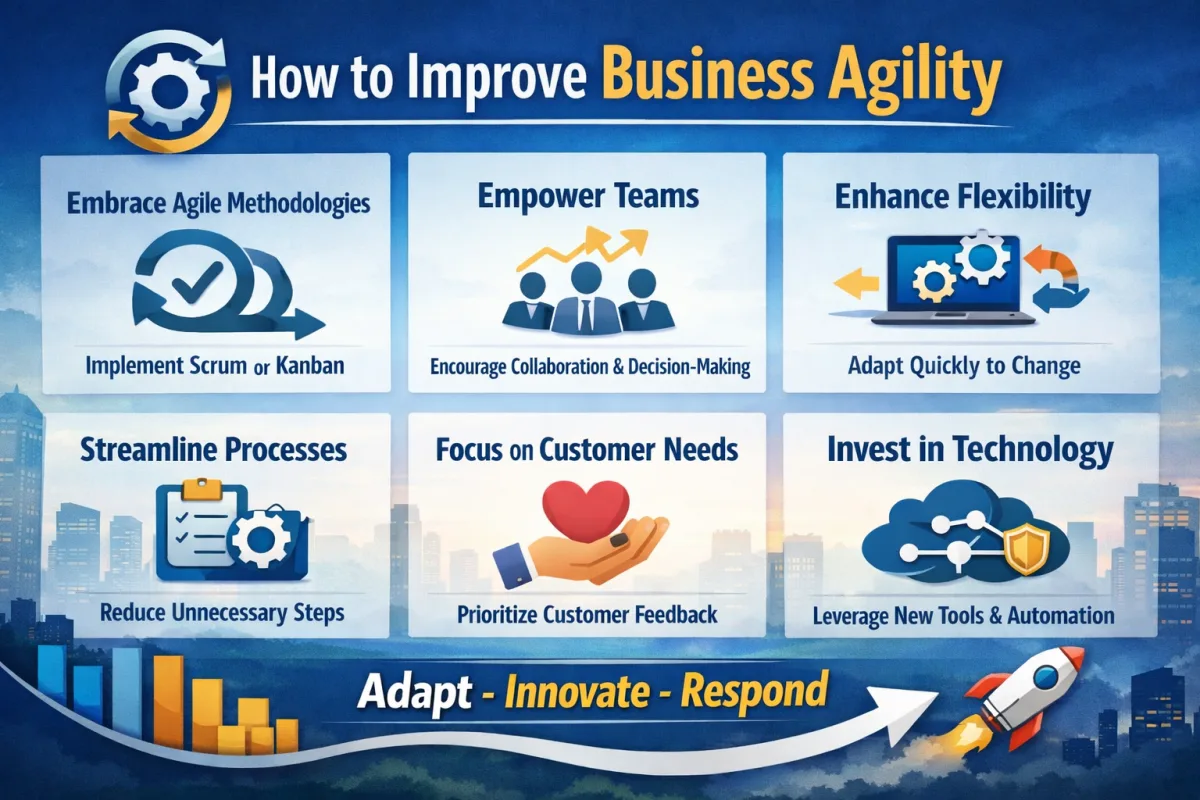
In a competitive landscape, merely existing isn't enough. Businesses must constantly evolve, adapt, and refine their internal workings to stay relevant and profitable. That’s why understanding how to optimize business operations isn't just an advantage; it's a fundamental necessity for survival and growth. We're talking about more than just cutting costs; it's about making every part of your organization work smarter, faster, and with greater purpose. It’s about creating a lean, agile machine capable of delivering exceptional value.
Understanding Your Current Operations: The Foundation of Optimization
Before you can improve something, you must first understand it inside and out. This initial diagnostic phase is critical for any successful operational optimization initiative. You can't fix what you don't fully comprehend. It requires a deep dive into every process, from customer acquisition to product delivery, and even internal administrative tasks. Where are the bottlenecks? What's causing delays? Are resources being misallocated?
Start by mapping your current processes. Visualizing workflows helps identify redundancies, unnecessary steps, and areas of waste. A simple flowchart can reveal complexities that aren't apparent on the surface. Engage your team members who are directly involved in these processes; they often have invaluable insights into daily frustrations and potential improvements. Their perspective is crucial because they're on the front lines, experiencing the operational friction firsthand. Ignoring their input is a missed opportunity for meaningful change.
Data plays a pivotal role here. Collect metrics on cycle times, error rates, resource utilization, and customer satisfaction. This quantitative analysis provides an objective baseline against which future improvements can be measured. Without this initial data, you’re essentially flying blind, unable to definitively prove the impact of your optimization efforts. Remember, what gets measured gets managed, and ultimately, gets improved.
Leveraging Technology for Operational Efficiency
Technology isn't just a tool; it's a transformative force for modern business operations. The right technological solutions can automate repetitive tasks, improve data accuracy, enhance communication, and provide real-time insights that were previously unattainable. Think about how much time your team spends on manual data entry, scheduling, or reporting. Automation can free them up for higher-value activities that drive innovation and customer satisfaction.
Consider the power of Customer Relationship Management (CRM) systems for sales and marketing, Enterprise Resource Planning (ERP) software for integrating core business processes, or project management tools for streamlined collaboration. Cloud-based solutions, in particular, offer scalability and accessibility that traditional on-premise systems often can't match. They allow for flexible work arrangements and ensure data is always up-to-date and accessible to authorized personnel, regardless of their location.
The Impact of Intelligent Automation
Beyond standard software, intelligent automation, including Robotic Process Automation (RPA), is revolutionizing how companies execute high-volume, rules-based tasks. RPA bots can mimic human actions, interacting with applications and systems to process transactions, manipulate data, and trigger responses far faster and with fewer errors than manual execution. This isn't about replacing people; it's about augmenting human capability, allowing employees to focus on strategic thinking, problem-solving, and creative endeavors that only humans can provide. Companies that adopt advanced analytics in operations can see profit increases of 10-20%, according to a McKinsey report, underscoring technology's profound impact.
Streamlining Processes and Eliminating Waste
At the heart of optimizing business operations lies the relentless pursuit of efficiency. This means systematically identifying and eliminating waste in all its forms. Drawing inspiration from Lean methodologies, we recognize waste not just as physical refuse, but as anything that doesn't add value for the customer or the business. This includes overproduction, waiting times, unnecessary transport, over-processing, excess inventory, defects, and underutilized talent.
Process streamlining often involves simplifying complex workflows. Can two steps be combined into one? Can a decision point be moved earlier in the process to prevent rework? Sometimes, the most impactful changes are surprisingly simple. Challenge every step of a process: Why do we do it this way? Is there a better, faster, or less resource-intensive method?
Implementing standard operating procedures (SOPs) is another crucial step. SOPs ensure consistency, reduce errors, and make training new employees far more efficient. When everyone follows the same best practices, you minimize variability and improve output quality. Regularly review and update these SOPs to reflect new insights and improvements, ensuring they remain relevant and effective.
Cultivating a Culture of Continuous Improvement
Operational optimization isn't a one-time project; it's an ongoing journey. The most successful organizations embed a culture of continuous improvement, where everyone, from the CEO to the front-line employee, is empowered and encouraged to identify opportunities for enhancement. This requires a shift in mindset: problems aren't failures, but rather opportunities to learn and refine.
Encourage feedback loops. Create channels where employees can submit ideas, report inefficiencies, or suggest changes without fear of reprisal. Implement regular team meetings dedicated to process review and problem-solving. Celebrate small wins and recognize individuals or teams who contribute to operational excellence. This fosters engagement and reinforces the idea that everyone has a role in making the business better.
Invest in training and development. Equip your team with the skills to analyze processes, utilize new technologies, and adapt to change. A workforce that understands the principles of efficiency and problem-solving is your greatest asset in the quest for optimized operations. Remember, people are at the core of every process; their engagement and capabilities are paramount.
Measuring Success: Continuous Optimization and KPIs
How do you know if your efforts to optimize business operations are actually working? Measurement, of course. Establishing clear Key Performance Indicators (KPIs) before you begin any optimization initiative is non-negotiable. These KPIs should directly relate to your operational goals, whether it’s reducing costs, improving throughput, shortening cycle times, or enhancing customer satisfaction. Companies that actively work to optimize their business operations often report significant gains; for instance, a study by the Aberdeen Group found best-in-class companies achieved 2.5 times greater year-over-year improvement in operating costs.
Regularly monitor these KPIs and analyze the data. Are you seeing the improvements you anticipated? If not, why? This data-driven approach allows you to make informed adjustments and pivot strategies as needed. Don't be afraid to experiment and iterate. A/B testing different process flows or technological solutions can provide valuable insights into what truly drives efficiency within your specific context.
Set up dashboards that provide real-time visibility into your operational performance. This transparency keeps everyone informed and accountable. Quarterly or annual reviews of your entire operational framework are also essential to ensure that your processes remain aligned with your strategic business objectives and market demands. The business landscape is always shifting; your operations must be agile enough to shift with it.
What This Means for You
Optimizing your business operations isn't just about making things run smoother; it's a direct path to increased profitability, enhanced customer satisfaction, and a stronger competitive position. It means your resources are used more effectively, your employees are more engaged, and your business is more resilient to market fluctuations. By systematically analyzing your current state, embracing technology, ruthlessly eliminating waste, fostering a culture of continuous improvement, and rigorously measuring your progress, you'll transform your organization from reactive to proactive, from good to great.
The journey to operational excellence is continuous, but the rewards are substantial. It demands commitment, critical thinking, and a willingness to challenge the status quo. Don't view it as a daunting task, but rather as an exciting opportunity to unlock your business's full potential. Begin today by identifying just one process that needs improvement, and take that first crucial step toward a more efficient, effective, and ultimately, more successful enterprise.