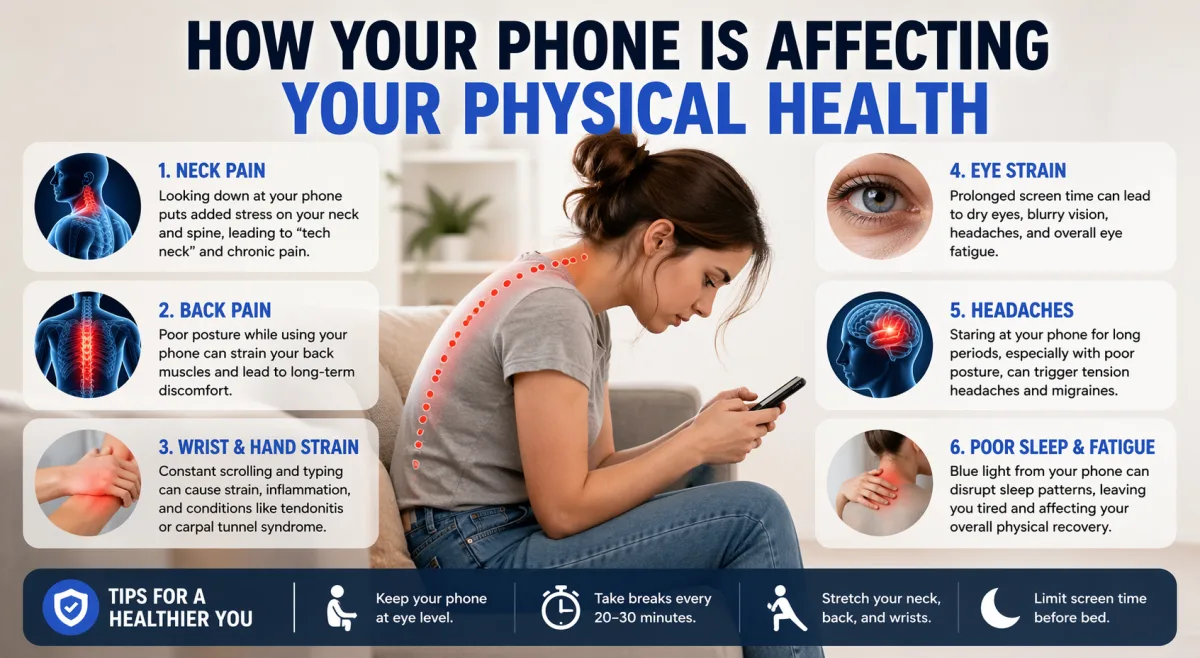
That sleek device in your pocket or hand? It’s more than just a communication tool; it’s a constant companion, an information hub, and, for many, an indispensable part of daily life. But while we celebrate its convenience and connectivity, it’s crucial to confront an uncomfortable truth: How Your Phone Is Affecting Your Physical Health in ways you might not even realize. This isn't about fear-mongering; it's about understanding the tangible, often subtle, impacts of constant screen interaction on our bodies.
From the strain on your eyes to the curve of your spine, the cost of our digital dependence is mounting. Let's pull back the curtain on the physiological changes happening beneath the surface, examining the real, measurable effects of your phone usage.
The Silent Strain: Musculoskeletal Issues and Your Phone
You’ve probably heard of "text neck," but it's more than just a catchy phrase. It's a genuine, growing health concern directly linked to the way we interact with our smartphones. Tilting your head forward to look at your phone puts immense pressure on your cervical spine.
Consider this: the average human head weighs about 10-12 pounds. Tilting it forward just 15 degrees effectively doubles the weight your neck has to support, making it feel like 27 pounds. Increase that tilt to 60 degrees – a common posture for texting – and your neck muscles and ligaments are struggling to support an astounding 60 pounds. That's like carrying an 8-year-old child on your neck for hours each day.
Text Neck Syndrome: A Modern Epidemic
This sustained poor posture doesn't just cause temporary discomfort; it leads to a cascade of problems:
- Chronic Neck Pain: Persistent dull aches or sharp, radiating pain in the neck and shoulders.
- Headaches: Often originating from tension in the neck muscles.
- Spinal Degeneration: Over time, this chronic stress can accelerate wear and tear on the discs and vertebrae in your neck.
- Reduced Mobility: Stiffness and limited range of motion in the neck and upper back.
- Nerve Compression: In severe cases, compressed nerves can lead to numbness, tingling, or weakness in the arms and hands.
It's not just your neck. Repetitive strain injuries (RSIs) are also on the rise. "Smartphone thumb" or "texting thumb" (De Quervain’s tenosynovitis) is an inflammation of the tendons on the thumb side of your wrist, caused by the constant swiping, typing, and gaming motions. Your hands and wrists weren't designed for this kind of sustained, small-motor activity.
Digital Eye Strain and Vision Changes: What Your Phone Does to Your Eyes
Staring at a small, bright screen for extended periods takes a significant toll on your vision. This phenomenon, often called Computer Vision Syndrome or Digital Eye Strain, affects a staggering number of people. A 2016 study published in the journal Optometry and Vision Science found that over 60% of adults experience symptoms of digital eye strain.
Your eyes work harder to focus on tiny text and images, and the problem is compounded by several factors:
- Reduced Blink Rate: When you concentrate on a screen, you blink less frequently – sometimes by as much as 50%. This leads to dry, irritated eyes.
- Blue Light Exposure: Smartphones emit high-energy visible (HEV) blue light. While not definitively proven to cause permanent retinal damage in typical usage, it contributes to eye fatigue and can disrupt your body's natural sleep cycle.
- Glare and Contrast: The glare from screens and the high contrast between text and background force your eyes to constantly adjust, increasing strain.
- Incorrect Viewing Distance: Holding your phone too close or at an awkward angle puts extra stress on your eye muscles.
Symptoms of digital eye strain include blurry vision, dry eyes, headaches, and sensitivity to light. While these effects are usually temporary, prolonged exposure can exacerbate underlying vision problems and cause chronic discomfort.
Sleep Disruption and Hormonal Imbalance: The Blue Light Effect
Your phone isn't just affecting your physical health during the day; it's actively sabotaging your sleep at night. The primary culprit is the blue light emitted by screens, which plays a crucial role in regulating your circadian rhythm – your body’s natural sleep-wake cycle.
Exposure to blue light, particularly in the evening, signals to your brain that it's daytime. This suppresses the production of melatonin, the hormone responsible for making you feel sleepy. Even a short session of scrolling before bed can delay the onset of sleep and reduce its quality.
Poor sleep isn't just about feeling tired; it has profound implications for your overall physical health:
- Weakened Immune System: Chronic sleep deprivation compromises your body's ability to fight off infections.
- Metabolic Issues: It disrupts hormone regulation, impacting appetite control and increasing the risk of weight gain, insulin resistance, and type 2 diabetes.
- Cardiovascular Health: Long-term lack of sleep is linked to higher blood pressure and an increased risk of heart disease.
- Cognitive Impairment: Reduced concentration, memory problems, and impaired decision-making are common.
The temptation to check notifications or scroll through social media before bed is strong, but it's a direct trade-off for restorative sleep, impacting everything from your energy levels to your long-term health.
Sedentary Lifestyle and Metabolic Health: A Deeper Look at Your Phone's Impact
One of the most insidious ways your phone is affecting your physical health is by contributing to a sedentary lifestyle. The more time you spend absorbed in your device, the less time you're likely to be moving. This isn't just about missing a workout; it's about the cumulative effect of prolonged sitting or lying down.
Research consistently links excessive sedentary behavior to a host of health problems, independent of how much exercise you get. A study published in the Annals of Internal Medicine highlights that prolonged sitting increases the risk of all-cause mortality, cardiovascular disease, and type 2 diabetes.
Your phone often encourages this inactivity. Think about:
- Endless Scrolling: Hours can vanish as you browse social media, news feeds, or entertainment.
- Gaming Marathons: Mobile gaming, while engaging, often involves long periods of stationary play.
- Passive Consumption: Watching videos or reading articles on your phone often means staying put.
This lack of movement slows your metabolism, reduces your body's ability to regulate blood sugar, and decreases calorie expenditure. It's a subtle but powerful driver of weight gain and metabolic syndrome, creating a ripple effect across your entire physiological system.
What This Means For You: Practical Steps to Mitigate Phone's Physical Effects
Acknowledging the problem is the first step. The good news is you don't have to ditch your phone entirely to protect your physical health. Small, consistent changes can make a big difference.
- Mind Your Posture: Hold your phone at eye level as much as possible to reduce neck strain. Use a phone stand or prop it up. Take frequent breaks to stretch your neck and shoulders.
- Implement the 20-20-20 Rule for Your Eyes: Every 20 minutes, look at something 20 feet away for at least 20 seconds. This helps your eye muscles relax and reduces digital eye strain. Blink consciously to keep your eyes moist.
- Establish a Digital Curfew: Stop using all screens (including your phone) at least 60-90 minutes before bedtime. Keep your phone out of your bedroom to avoid the temptation to check it during the night.
- Move More, Scroll Less: Set reminders to stand up, stretch, or walk around every 30 minutes. Integrate short bursts of activity throughout your day. Can you take a call while walking? Listen to a podcast while doing chores?
- Adjust Settings: Use "Night Shift" or "blue light filter" settings on your phone, especially in the evening. Adjust screen brightness to match your environment and increase text size for easier reading.
- Consider Ergonomics: If you use your phone for extended periods for work or specific tasks, think about ergonomic accessories like pop sockets for better grip or a Bluetooth keyboard for typing.
- Clean Your Phone: Your phone is a notorious germ magnet. Regularly wipe it down with a disinfectant wipe to prevent the spread of bacteria and viruses, especially before and after eating.
The Unseen Germ Factory: Your Phone and Contagion
Beyond the musculoskeletal and visual impacts, there's another, often overlooked aspect of how your phone is affecting your physical health: its role as a potential vector for germs. Your smartphone travels everywhere with you – to the bathroom, on public transport, to your desk, and into your bed. It touches countless surfaces and then comes into direct contact with your face, hands, and mouth.
Studies have repeatedly shown that phones harbor a significant amount of bacteria, including common culprits like E. coli, Staphylococcus aureus, and even flu viruses. One study from the University of Arizona found that cell phones carry 10 times more bacteria than most toilet seats. Think about that for a moment. Every time you touch your phone and then touch your face, you're potentially transferring these microbes.
This constant exposure increases your risk of:
- Skin Infections: Bacteria from your phone can contribute to acne or other skin irritations, especially if you hold the phone directly against your cheek.
- Gastrointestinal Illnesses: Contaminants transferred from your phone to your hands, and then to your mouth, can lead to stomach bugs.
- Respiratory Infections: Viruses can live on surfaces for hours, and your phone acts as a perfect intermediary for spreading colds and flu.
Regular hand washing is vital, but so is routinely cleaning your phone with appropriate disinfectants. It’s an essential, yet often forgotten, step in personal hygiene that directly impacts your susceptibility to illness.
Your smartphone is an incredible piece of technology, but its benefits shouldn't come at the expense of your well-being. Understanding how your phone is affecting your physical health – from head to thumb, from your sleep cycle to your immune system – empowers you to use it more mindfully. By implementing these simple, proactive strategies, you can maintain your connection to the digital world without sacrificing your most valuable asset: your health. It’s about finding balance, making conscious choices, and taking control back from the screen.