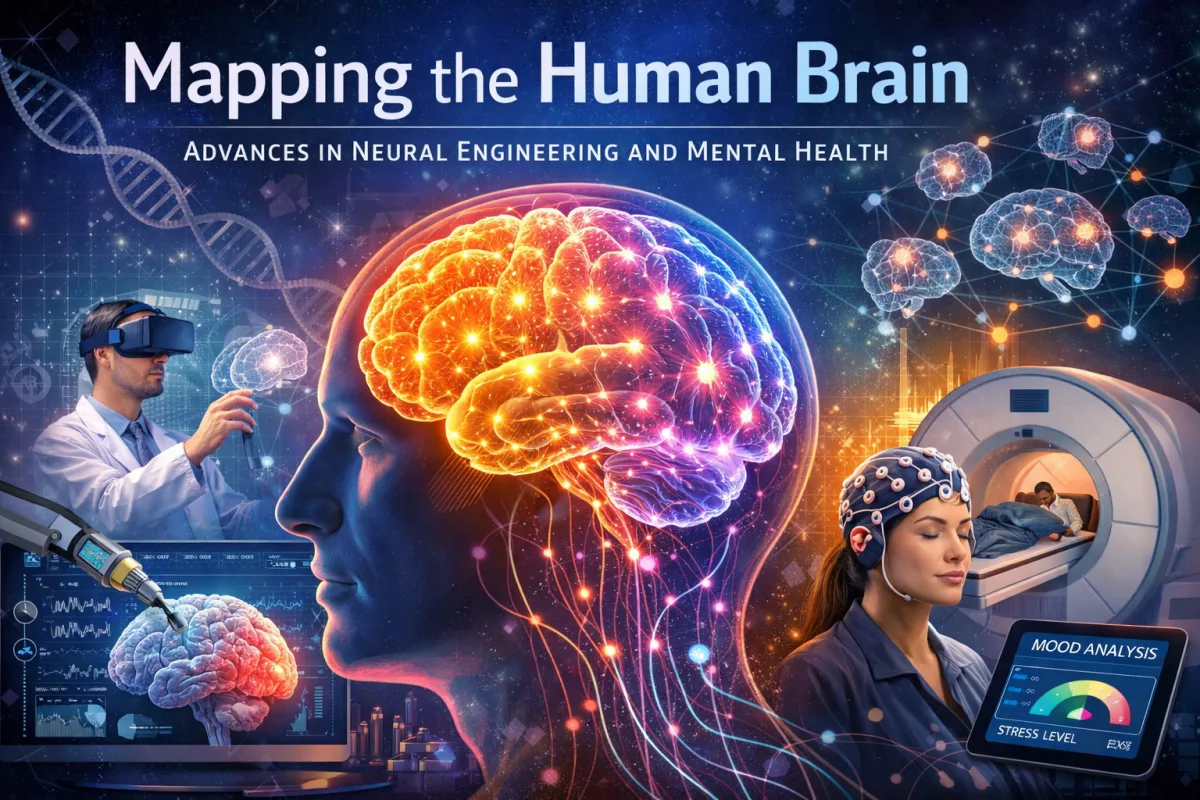
For centuries, the human brain remained largely an enigma, a complex universe of billions of neurons operating beyond our grasp. Today, however, we’re witnessing an unprecedented era of discovery, where powerful technologies are finally allowing us to peer into its intricate architecture. This isn't just about scientific curiosity; it's about fundamentally changing how we understand and treat some of humanity's most debilitating conditions. The ongoing effort of mapping the human brain, driven by incredible advances in neural engineering, is revolutionizing the field of mental health.
We're moving beyond rudimentary observations to a granular understanding of neural circuits, paving the way for targeted interventions that promise a future free from the broad, often imprecise treatments of the past. It's a journey filled with both immense promise and complex ethical considerations, but one that’s undeniably shaping the future of medicine.
The Quest to Chart the Brain's Labyrinthine Networks
Imagine trying to understand a supercomputer without a wiring diagram. That's been the challenge with the brain for most of history. Early neuroscientists, like Santiago Ramón y Cajal, laboriously sketched individual neurons under microscopes, laying foundational groundwork. But it’s only in recent decades that we’ve gained the tools to visualize the brain in action, at scale.
Modern brain mapping techniques are nothing short of spectacular. Functional Magnetic Resonance Imaging (fMRI) reveals which brain regions light up during specific tasks, showing us the brain’s dynamic activity. Electroencephalography (EEG) captures electrical impulses with incredible temporal precision. Diffusion Tensor Imaging (DTI) maps the white matter tracts, the brain’s superhighways connecting different regions, giving us a clearer picture of its structural connectivity.
Massive international collaborations like the Human Connectome Project and the U.S. NIH's BRAIN Initiative (Brain Research Through Advancing Innovative Neurotechnologies) are compiling vast datasets, creating atlases of brain activity and connectivity that are open to researchers worldwide. These projects aren't just charting static maps; they're creating dynamic models that show how brain networks change over time, in health and disease. This unprecedented level of detail is crucial for unlocking the secrets of neurological and psychiatric disorders.
Neural Engineering: Bridging Mind and Machine
Brain mapping provides the blueprints; neural engineering builds the bridges. This interdisciplinary field applies engineering principles to understand, repair, replace, or enhance brain function. It’s where the abstract world of neuroscience meets the tangible world of technology, creating devices and systems that interact directly with the nervous system.
One of the most exciting areas is Brain-Computer Interfaces (BCIs). For individuals with paralysis, BCIs are transforming lives, allowing them to control prosthetic limbs or communicate through a computer cursor with their thoughts alone. We’ve seen incredible demonstrations where people with locked-in syndrome can type messages simply by imagining moving a hand or speaking a word. These aren't just assistive technologies; they're powerful windows into how the brain encodes intent and action.
Deep Brain Stimulation (DBS) is another triumph of neural engineering, moving beyond experimental stages to become a standard treatment for conditions like Parkinson's disease, essential tremor, and severe dystonia. It involves surgically implanting electrodes in specific brain regions, delivering precisely timed electrical pulses to modulate abnormal brain activity. This targeted approach has dramatically improved quality of life for thousands, reducing tremors and restoring motor control where medication alone couldn't.
Personalized Neurotherapeutics
What makes these advances truly revolutionary for mental health is the shift towards personalized neurotherapeutics. Historically, psychiatric treatments often involved a trial-and-error approach with medications that affect the entire brain. Now, with more detailed brain maps, we can identify specific neural circuits implicated in individual conditions.
Imagine a future where your brain scan reveals a particular circuit dysfunction linked to your depression, and a neuroengineer designs a closed-loop DBS system that only activates when that circuit shows signs of dysregulation. This isn't science fiction; it’s an active area of research. These systems learn and adapt, offering a level of precision and personalization that was unimaginable just a few decades ago, moving us closer to truly bespoke treatments for complex brain disorders.
Rewiring the Mind: New Avenues for Mental Health Treatment
The insights gleaned from mapping the brain are directly translating into innovative treatments for mental health. We're learning that many psychiatric disorders aren't just "chemical imbalances" but rather dysfunctions in specific neural networks. This understanding allows for interventions that are far more targeted than traditional pharmaceuticals.
Take severe depression, for instance. For patients resistant to medication and psychotherapy, DBS is now being explored for specific circuits associated with mood regulation, such as the subgenual cingulate cortex. While still largely experimental for depression, early results are promising, offering hope where little existed before. Similarly, for Obsessive-Compulsive Disorder (OCD), DBS targeting specific pathways has shown significant relief for otherwise intractable cases, with a reported 47% response rate in one major review.
Non-invasive brain stimulation techniques are also rapidly evolving. Transcranial Magnetic Stimulation (TMS), which uses magnetic fields to stimulate or inhibit specific brain regions, is an FDA-approved treatment for major depression and OCD. Focused ultrasound, another emerging technology, allows for even more precise targeting, potentially disrupting problematic circuits without the need for invasive surgery. These technologies offer patients alternatives with fewer systemic side effects, directly addressing the neural underpinnings of their conditions.
Ethical Frontiers and the Future of Brain Technology
As neural engineering propels us into this brave new world, we must confront profound ethical questions. The ability to map, monitor, and even modulate brain activity raises concerns about privacy and autonomy. Who owns your brain data? Could employers or governments access it? These are not trivial questions.
The potential for cognitive enhancement, while exciting, also presents a moral maze. If we can boost memory or focus with neural implants, will it create a new divide between those who can afford such enhancements and those who cannot? What does it mean to be human when parts of our cognition are augmented by technology?
These challenges have spurred the development of "neuro-rights" – proposed human rights designed to protect individuals from the misuse of neurotechnology. These rights advocate for mental privacy, cognitive liberty, and protection from algorithmic bias and discrimination. It’s clear that as our capabilities grow, so too must our ethical frameworks and regulatory oversight.
What This Means For You
For patients and their families, these advances represent a profound shift from managing symptoms to potentially addressing the root causes of neurological and psychiatric conditions. If you or a loved one struggles with a severe mental health disorder, the landscape of treatment is expanding, offering hope for more personalized and effective interventions.
For society at large, it means a deeper understanding of what makes us think, feel, and behave the way we do. This knowledge can foster greater empathy and reduce the stigma associated with mental illness. However, it also demands an informed public. We must engage in critical conversations about the societal implications of brain technologies, ensuring they are developed and deployed responsibly, equitably, and for the benefit of all.
The journey of mapping the human brain is far from over; in many ways, it’s just beginning. We stand at a pivotal moment, on the cusp of truly unlocking the brain's secrets. The synergy between neuroscience and engineering isn't merely advancing our scientific understanding; it’s redefining medicine, offering unprecedented hope for those grappling with mental health challenges, and pushing us to contemplate what it truly means to be human in an age of neural innovation. This isn't just about discovery; it's about transformation.