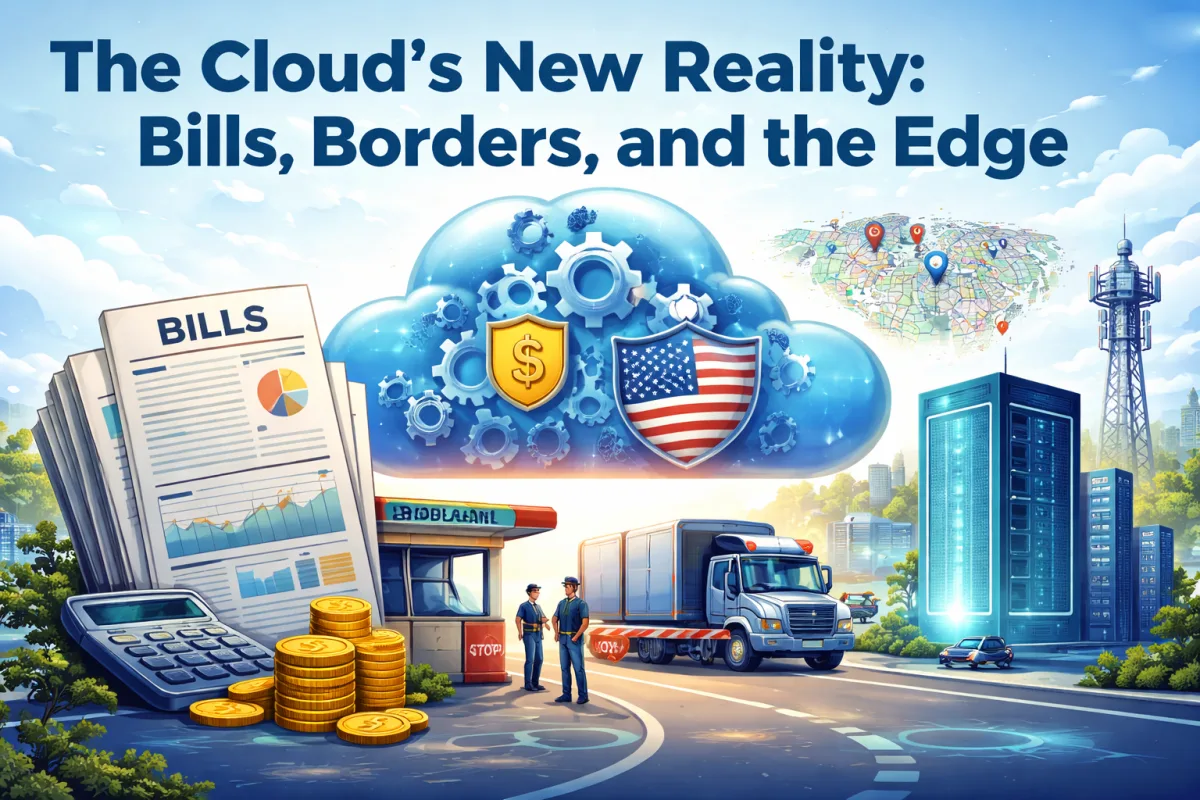
The Cloud's New Reality: It's Not Just About Lift-and-Shift Anymore
Remember when "the cloud" was this nebulous, almost magical concept? It promised infinite scalability, reduced infrastructure costs, and the agility to transform businesses overnight. For a time, it delivered. Companies scrambled to migrate everything, from their legacy databases to their customer-facing applications, believing the future was entirely off-premise. And for good reason: the initial wave of cloud adoption truly revolutionized how we build, deploy, and scale technology.
But here's the uncomfortable truth: the honeymoon phase is over. We're past the era of simply "lift-and-shift" and hoping for the best. The cloud, now a mature, indispensable part of our digital lives, has grown up, and with maturity comes complexity, nuance, and a whole new set of challenges that demand smarter, more strategic thinking. What once felt like a boundless, frictionless expanse now reveals its borders, its hefty bills, and its ever-expanding edges.
The Bill Comes Due: FinOps Takes Center Stage
For years, the allure of the cloud was its perceived cost savings. Ditch the expensive data centers, the hardware refresh cycles, the dedicated IT teams managing physical servers, and watch your budget shrink. The reality, however, often proves far different. Many organizations, particularly those that rushed their migrations, found themselves staring down monthly invoices that dwarfed their previous on-premise expenditures.
Why the sticker shock? Because unchecked cloud consumption is a runaway train. Developers spin up resources for testing and forget to turn them off. Underutilized instances hum away, costing money for doing nothing. Data egress fees surprise even the most seasoned engineers. We’ve seen countless examples, like the mid-sized SaaS company in Austin that realized they were overspending by nearly 35% on their cloud bill, simply because they lacked proper visibility and governance across their development teams. It wasn't incompetence; it was a lack of a disciplined approach.
This is where FinOps enters the picture, not as a trend, but as an absolute necessity. It's the operational discipline that brings financial accountability to the variable spend model of cloud computing. FinOps isn't just about cutting costs; it's about optimizing value. It's about empowering engineers to make cost-aware decisions, providing finance teams with transparency, and fostering collaboration between traditionally siloed departments. Any organization serious about its long-term cloud strategy isn't asking "if" they need FinOps, but "how quickly can we implement it?"
Hybrid and Multi-Cloud: The Messy Middle Ground
The early narrative often suggested a monolithic move to a single public cloud provider. Go all-in with AWS, or Azure, or Google Cloud. Simpler, right? The market, it turns out, had other ideas. Today, the vast majority of enterprises operate in a hybrid or multi-cloud environment. That's a mix of on-premise infrastructure with one or more public cloud providers, or leveraging multiple public cloud vendors simultaneously.
Why this fragmented approach? For some, it's about avoiding vendor lock-in – a very real concern when your entire digital backbone rests on a single provider's ecosystem. For others, it's regulatory compliance, data sovereignty, or simply inheriting different cloud environments through mergers and acquisitions. Then there's the optimization play: perhaps one cloud offers superior AI/ML services, while another excels in specific database capabilities. Managing this complexity is no small feat, demanding sophisticated orchestration tools and a deep understanding of each platform's nuances. It’s a messy middle ground, but it’s where most businesses live, and it’s not changing anytime soon.
Closer to the Action: The Rise of Edge Computing
While the hyperscalers build ever-larger data centers, another crucial trend is pulling compute power in the opposite direction: to the very edge of the network. Edge computing isn't replacing the cloud; it's extending it, pushing processing closer to where data originates. Think about the deluge of data generated by IoT devices, autonomous vehicles, smart factories, or even just your smartphone. Sending all that raw data back to a centralized cloud for processing introduces latency, consumes massive bandwidth, and simply isn't efficient for real-time applications.
Edge computing addresses these challenges head-on. It allows immediate data analysis and decision-making at the source, dramatically reducing latency and improving responsiveness. Imagine a smart factory where sensors detect a potential machine failure. You don't want to wait for that data to travel to a distant cloud and back; you need an immediate alert, perhaps even an automated shutdown. That's edge computing in action. It's a critical component for the next wave of innovation, especially in sectors demanding ultra-low latency and localized intelligence.
Borders in the Cloud: Sovereign and Industry-Specific Solutions
The idea of a truly borderless cloud, where data flows freely across geographies, is increasingly a fantasy. Geopolitical realities, stringent data privacy regulations like GDPR in Europe, and national security concerns are driving the demand for what we call "sovereign cloud" solutions. These are cloud environments designed to meet specific jurisdictional requirements for data residency, access, and governance, often ensuring data never leaves a particular country's borders and is subject only to its laws.
Countries and even specific industries are demanding more control over their digital infrastructure. We're seeing European cloud providers building dedicated sovereign cloud regions, and even hyperscalers partnering with local entities to offer compliant services. This isn't just about storing data in a specific location; it’s about controlling who can access it, under what jurisdiction, and with what level of oversight. It's a fundamental shift, moving beyond a purely technical discussion to one deeply embedded in policy, law, and national interest.
Alongside this, we're witnessing a proliferation of industry-specific cloud offerings. Healthcare clouds, financial services clouds, manufacturing clouds – these aren't just generic cloud platforms with a new label. They're tailored environments that come pre-configured with industry-specific compliance frameworks, security protocols, and even specialized applications. They recognize that a one-size-fits-all approach no longer serves the nuanced needs of highly regulated or specialized sectors.
Sustainability and the Cloud's Footprint
As the cloud continues its relentless expansion, its environmental footprint is coming under increasing scrutiny. Those massive data centers, humming with servers, consume staggering amounts of electricity and water. While major cloud providers have made significant strides in sourcing renewable energy and improving energy efficiency, the sheer scale of global cloud infrastructure means its environmental impact remains a pressing concern.
Businesses now factor sustainability into their cloud adoption strategies. They're asking providers about their carbon footprint, their water usage, and their commitment to renewable energy. And rightly so. Choosing a cloud provider isn't just a technical decision; it's an ethical and environmental one. Are we doing enough to ensure this essential backbone of our digital world doesn't become an ecological burden? It's a question we'll collectively grapple with for years to come.
The Future is Nuanced, Not Simple
The cloud isn't disappearing; far from it. It's simply maturing into a more complex, nuanced, and strategic domain. The days of simply migrating everything and calling it a day are long gone. Today's cloud demands a sophisticated understanding of costs, geopolitical realities, regulatory landscapes, and specialized technical requirements. It requires a strategic roadmap, not just a migration plan.
For organizations looking ahead, the message is clear: embrace FinOps, understand the intricacies of hybrid and multi-cloud management, strategically deploy edge computing where it makes sense, and navigate the evolving landscape of sovereign and industry-specific clouds. The cloud remains an incredibly powerful tool for innovation and efficiency, but its full potential now lies in intelligent, deliberate, and optimized utilization. The future of cloud computing isn't about limitless expansion; it's about smart, sustainable, and highly strategic deployment.