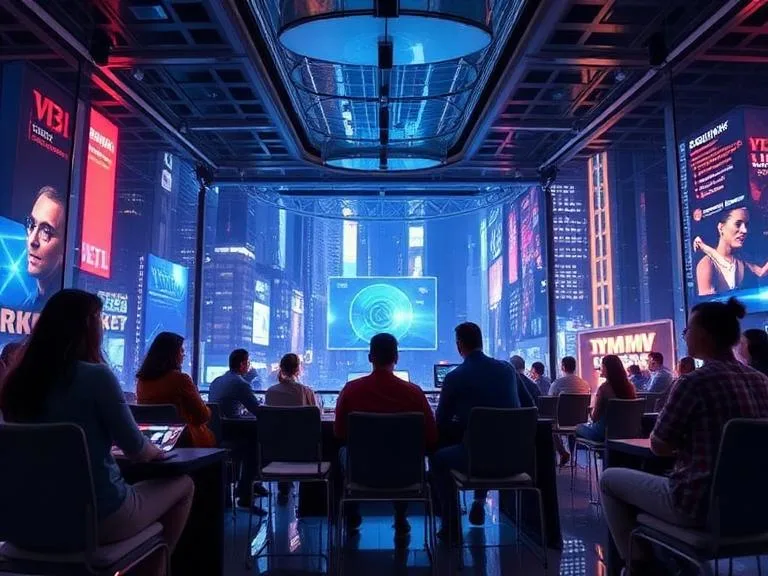
The screens we stare at daily are rapidly transforming, becoming portals to realms far more dynamic and deeply integrated into our lives than we ever imagined. The future of digital experiences isn't some distant horizon; it's here, unfolding in real-time, reshaping how we work, play, connect, and even perceive reality. We’re moving beyond flat interfaces into rich, multi-sensory environments where the line between the physical and digital blurs with astonishing speed. This isn't just about faster internet or sharper screens; it's about a fundamental shift in how we interact with information and each other, making every digital encounter more profound and personal.
Immersive Realities: Stepping Beyond the Screen
Remember when virtual reality felt like a niche gimmick, reserved for hardcore gamers or experimental labs? That perception is rapidly becoming obsolete. Today's immersive technologies are no longer confined to headsets; they’re blending seamlessly into our environments, offering the next evolution of digital experiences.
Augmented Reality (AR), in particular, is proving to be the silent revolutionary. It overlays digital information onto our physical world, enhancing rather than replacing our surroundings. Think about trying on clothes virtually before buying them, or navigating a new city with digital arrows projected onto the pavement. Apple's Vision Pro, despite its high price tag, represents a significant step towards spatial computing, aiming to make digital content feel present in your physical space. It's not just a screen; it's an extension of your visual field, allowing you to manipulate apps and media with natural gestures and eye movements.
Meanwhile, VR continues its march toward mainstream adoption, shedding its bulky image for sleeker, more accessible devices. Meta's Quest series has sold millions, bringing high-quality virtual worlds to everyday users. From collaborative workspaces in the metaverse to virtual concerts and interactive learning modules, these platforms aren't just for entertainment. They’re creating new paradigms for social interaction and professional collaboration, offering a sense of presence that traditional video calls simply can't match. It’s a powerful shift from looking at a screen to being truly within the digital experience.
Hyper-Personalization: Crafting Unique Digital Journeys
The days of one-size-fits-all digital interactions are behind us. Modern digital experiences thrive on personalization, dynamically adapting to individual users based on their preferences, behaviors, and even emotional states. This isn't just about recommending products; it's about tailoring entire interfaces and content streams to resonate deeply with each person.
Consider the sophisticated algorithms powering platforms like TikTok or Spotify. They don't just offer choices; they predict desires, serving up content so precisely aligned with your tastes that it often feels like magic. Spotify's "Discover Weekly" playlist, for instance, has become legendary for its accuracy, leveraging machine learning to analyze listening habits and identify new music you’re likely to love. This level of predictive personalization transforms passive consumption into an active, engaging discovery process.
E-commerce sites are also mastering this art, creating dynamic storefronts that change based on your browsing history, purchase patterns, and even real-time interactions. You'll see different promotions, product layouts, and suggested items than someone else visiting the exact same site. This isn't just a convenience; it's a strategic move. Data from Epsilon indicates that 80% of consumers are more likely to make a purchase from a brand that provides personalized experiences. That's a huge incentive for companies to invest in deeply understanding their users.
The Rise of Adaptive Interfaces
Personalization goes beyond content recommendations; it extends to the very interfaces we use. Adaptive interfaces are designed to learn and evolve with user interaction, simplifying complex tasks and anticipating needs. Think about a banking app that automatically surfaces your most frequent transactions or a smart home dashboard that prioritizes controls for devices you use at specific times of day. These interfaces aren't static; they're living systems that optimize themselves for efficiency and intuition, reducing cognitive load and making digital interactions feel effortless. They understand your context, your habits, and your goals, presenting information in the most relevant and accessible way possible.
Sensory Integration: The Tactile and Auditory Web
Our digital interactions are no longer purely visual. The future of digital experiences engages more of our senses, creating a richer, more embodied connection with the virtual world. Haptic feedback, in particular, is moving beyond simple phone vibrations, becoming a sophisticated tool for conveying information and enhancing immersion.
Advanced haptic technologies can simulate textures, resistance, and even impacts, making virtual objects feel tangible. Imagine trying on a virtual jacket and feeling the simulated texture of denim, or playing a game where you physically feel the recoil of a virtual weapon. Companies like HaptX are developing haptic gloves that provide realistic force feedback and tactile sensations, allowing users to "touch" and manipulate virtual objects with incredible precision. This isn't just about novelty; it's about reducing the cognitive gap between our physical selves and the digital content we consume, making interactions more intuitive and natural.
Audio, too, is undergoing a revolution. Spatial audio, which creates a three-dimensional soundscape, is now common in high-end headphones and even some smart speakers. This technology allows sounds to be positioned precisely in your environment, enhancing realism in gaming, virtual meetings, and entertainment. When a sound appears to come from behind or above you, it dramatically increases the sense of presence and immersion. This multi-sensory approach transforms passive consumption into an active, engaging experience that mirrors our real-world interactions more closely.
The Blurring Lines: Physical and Digital Convergence
The most compelling aspect of current digital evolution isn't just better digital experiences; it's how they're merging with our physical world. The concept of the "phygital" space, where physical and digital elements intertwine, is no longer theoretical. It's a fundamental aspect of modern commerce, entertainment, and even urban planning.
Retail stores, for instance, are integrating AR mirrors that let you virtually try on clothes or see how furniture looks in your home. Pop-up shops might use QR codes that unlock exclusive digital content or AR filters. Events, too, are embracing this convergence. Think of a live concert where attendees can use an AR app to see interactive visuals overlaid on the stage, or a museum tour enhanced with digital exhibits that react to your presence.
Smart cities are another prime example. They leverage IoT sensors and digital twins to create virtual representations of physical infrastructure, allowing for real-time monitoring, predictive maintenance, and optimized resource management. This convergence isn’t about replacing the physical; it’s about enriching it, making our environments more intelligent, responsive, and interactive. It’s creating a world where every object and space has the potential for a digital layer of information and interaction.
What This Means for You: Navigating the New Digital Frontier
For individuals, these advancements mean richer, more intuitive, and often more convenient interactions across almost every facet of life. You'll find tools that adapt to your specific needs, entertainment that feels incredibly real, and connections that offer a deeper sense of presence. However, it also means a greater need for digital literacy and critical engagement. Understanding how your data is used to personalize your experiences, for example, becomes paramount.
For businesses, the message is clear: adapt or become obsolete. Delivering exceptional digital experiences isn't just a competitive advantage; it's a fundamental requirement. This involves investing in user experience (UX) research, leveraging data to inform personalization strategies, and exploring immersive technologies that can differentiate your brand. Don't think of digital as a separate channel; consider it an integrated layer of your entire customer journey. Those who prioritize seamless, personalized, and engaging digital interactions will capture the loyalty of tomorrow's consumers.
It’s also an incredible time for creators and innovators. The tools and platforms for building these next-generation experiences are becoming more accessible, opening doors for anyone with a vision to shape the future of interaction. Are you ready to build in this new landscape?
The transformation is undeniable. From the subtle haptics in our controllers to the expansive, shared virtual worlds we inhabit, digital experiences have transcended their two-dimensional origins. They’ve become deeply interwoven with our reality, offering unparalleled immersion, personalization, and sensory engagement. We're not just observing the future of digital experiences; we're actively living it, shaping it with every tap, swipe, and virtual step. Embrace this evolving landscape, because the most exciting innovations are still just around the corner, waiting to redefine what's possible in the digital realm.