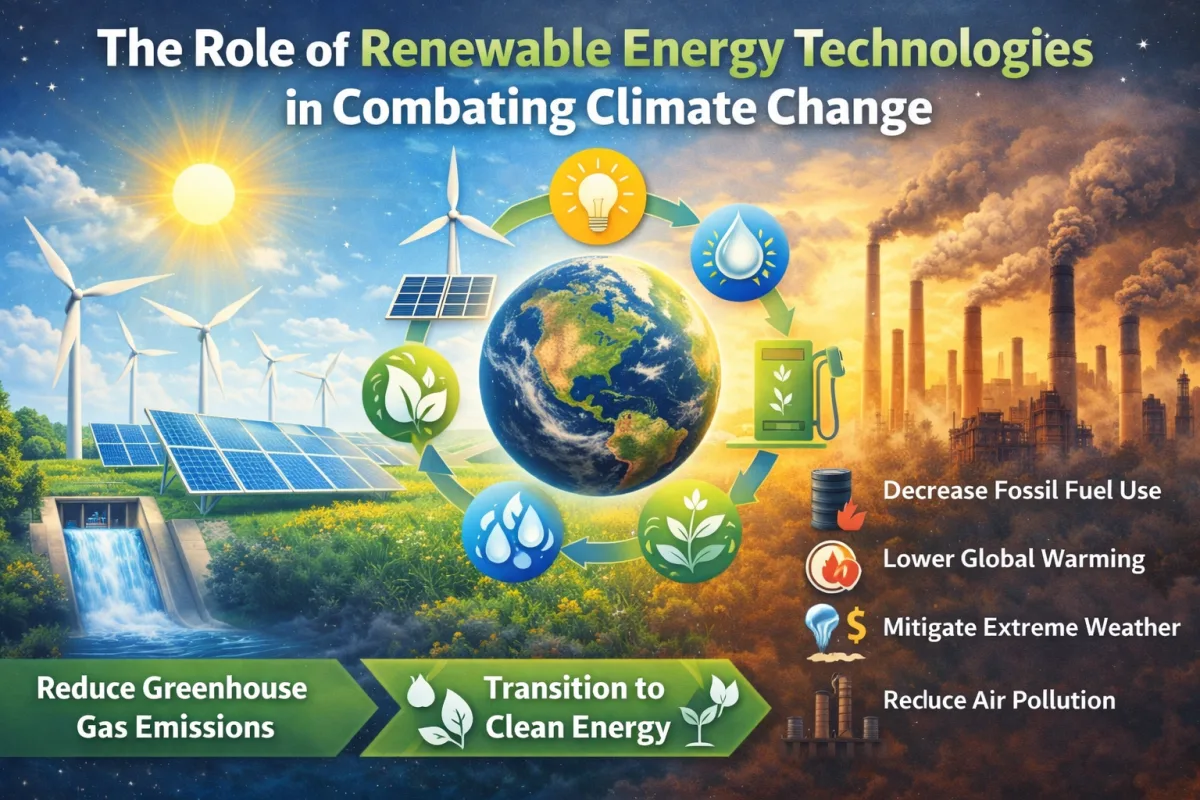
The planet is warming, and the evidence is undeniable. From melting glaciers to increasingly severe weather events, the impacts of climate change are no longer a distant threat but a present reality. At the heart of this crisis lies our reliance on fossil fuels, which pump greenhouse gases into the atmosphere, trapping heat and fundamentally altering our world. But there’s a powerful counter-narrative emerging, one driven by innovation, economic viability, and an urgent necessity: The Role of Renewable Energy Technologies in Combating Climate Change isn't just significant; it’s absolutely critical.
The Imperative for Decarbonization: Why Renewables are Non-Negotiable
For decades, our global energy system has been largely powered by coal, oil, and natural gas. These energy sources, while fueling industrial growth, also release massive amounts of carbon dioxide and other greenhouse gases when burned. The Intergovernmental Panel on Climate Change (IPCC) has made it clear: to avoid the most catastrophic impacts, we must achieve net-zero carbon emissions by mid-century. This isn't just about incremental changes; it demands a wholesale transformation of how we generate and consume energy.
This is where renewable energy technologies step in. Unlike fossil fuels, solar, wind, hydro, geothermal, and bioenergy sources produce little to no greenhouse gas emissions during operation. They harness naturally replenishing resources, making them inherently sustainable. The shift to these clean energy sources isn't merely an environmental choice; it's an economic opportunity, a geopolitical advantage, and a public health imperative. We’re talking about a fundamental redesign of our energy infrastructure, moving away from finite, polluting resources towards abundant, clean power.
Solar and Wind: Frontline Fighters in the Energy Transition
If you’ve looked up recently, you've probably noticed more solar panels on rooftops or seen towering wind turbines gracing distant horizons. These aren't just symbols of a greener future; they’re powerful, cost-effective technologies already driving significant decarbonization. Solar photovoltaic (PV) and wind power have seen astonishing growth and cost reductions over the past decade.
The International Renewable Energy Agency (IRENA) reported that the global weighted average cost of electricity from new utility-scale solar PV projects fell by 82% between 2010 and 2019, while onshore wind costs dropped by 46%. These technologies are now often the cheapest form of new electricity generation in many parts of the world, outcompeting fossil fuels without subsidies. This dramatic cost reduction has supercharged their deployment, allowing countries to rapidly increase their clean energy capacity.
Innovations Driving Efficiency and Storage
The rapid growth of solar and wind isn't just about dropping costs; it's also thanks to continuous technological innovation. Solar panels are becoming more efficient, converting more sunlight into electricity. Wind turbines are growing larger, capturing more energy from higher altitudes, and their designs are becoming more aerodynamically advanced. Crucially, advancements in energy storage, particularly lithium-ion battery technology, are addressing the intermittency challenge inherent to solar and wind.
- Battery Storage: Grid-scale batteries store excess renewable energy during periods of high generation (e.g., sunny afternoons, windy nights) and release it when demand is high or generation is low. This smooths out power supply, making renewables more reliable.
- Smart Grids: Modernizing electricity grids with advanced sensors, digital controls, and AI allows for better management of fluctuating renewable inputs, optimizing energy flow and reducing waste.
- Green Hydrogen: Electrolyzers powered by renewable electricity can split water into hydrogen and oxygen. This "green hydrogen" can be stored and used as a clean fuel for heavy industry, transportation, or even power generation, offering a flexible energy vector for hard-to-decarbonize sectors.
These innovations are making it possible to integrate ever-higher proportions of renewable energy into national grids, proving that a future powered primarily by clean sources isn't just a dream, but an achievable engineering feat.
Beyond Solar and Wind: A Diverse Portfolio of Clean Power
While solar and wind often grab the headlines, the broader suite of renewable energy technologies provides a diverse and robust strategy for combating climate change. Relying on a mix of clean sources ensures energy security, leverages local geographical advantages, and builds resilience into our energy systems.
Consider hydropower, a long-established renewable source that harnesses the energy of flowing water. While large-scale dams can have environmental impacts, modern run-of-river projects and existing infrastructure contribute significantly to emissions-free electricity. Geothermal energy, which taps into the Earth's internal heat, offers a constant, baseload power supply, independent of weather conditions. Countries like Iceland and New Zealand have harnessed this resource extensively, providing stable, clean power around the clock.
Bioenergy, derived from organic matter, also plays a role, though its sustainability depends heavily on sourcing and processing methods. When managed responsibly, bioenergy can offer dispatchable power and contribute to waste reduction. Emerging technologies, such as advanced tidal and wave energy converters, also hold promise for coastal regions, demonstrating that the innovation pipeline for clean energy is deep and varied.
Economic and Social Dividends of Renewable Energy Technologies
The benefits of transitioning to clean energy extend far beyond climate mitigation. This shift is a powerful engine for economic growth and social improvement. The renewable energy sector is a major job creator. IRENA estimates that global renewable energy employment reached 12.7 million jobs in 2021, a significant increase from previous years, and this number is projected to grow substantially as investments scale up.
Furthermore, energy independence is a huge dividend. Nations that rely heavily on imported fossil fuels are vulnerable to volatile global markets and geopolitical instability. By developing domestic renewable resources, countries can achieve greater energy sovereignty, stabilize energy prices, and keep wealth within their borders. Think about the billions saved by not importing oil and gas; that money can be reinvested into local economies, infrastructure, and education.
Finally, there are the profound public health benefits. Burning fossil fuels releases not just greenhouse gases but also particulate matter, sulfur dioxide, and nitrogen oxides, which contribute to air pollution. This pollution leads to millions of premature deaths globally each year and exacerbates respiratory and cardiovascular diseases. Shifting to renewable energy technologies means cleaner air, healthier communities, and reduced healthcare costs. It’s a win-win-win scenario for the planet, the economy, and human well-being.
What This Means For You: Empowering the Individual and Collective
It's easy to feel overwhelmed by the scale of climate change, but the rapid growth of renewable energy technologies offers tangible ways for individuals and communities to contribute to the solution. What can you do?
- Embrace Clean Energy: If available, choose a renewable energy provider for your home. Consider installing solar panels if your property allows. Every kilowatt-hour generated from a clean source reduces demand for fossil fuels.
- Advocate for Policy: Support policies that promote renewable energy development, incentivize electric vehicles, and invest in grid modernization. Your voice matters in pushing for systemic change.
- Invest Sustainably: Direct your investments towards companies leading the charge in renewable energy innovation, sustainable infrastructure, and green technologies.
- Reduce Your Consumption: While renewables clean up the supply side, reducing overall energy consumption through efficiency measures (better insulation, LED lighting, smart thermostats) complements these efforts perfectly.
The transition to a renewable-powered future isn't just for governments and corporations; it’s a collective endeavor that empowers individuals to be part of the solution. Your choices, big or small, contribute to the momentum.
A Future Powered by the Sun and Wind
The climate crisis is arguably humanity's greatest challenge, but it’s also an unprecedented opportunity for innovation and transformation. The role of renewable energy technologies in combating climate change is not merely supplementary; it is foundational. We’ve seen incredible progress in cost reduction, efficiency, and deployment, proving that a world powered by clean, sustainable energy isn't a utopian fantasy but a rapidly approaching reality. We have the technology, the economic rationale, and the moral imperative. Now, it's about accelerating the pace, overcoming the remaining hurdles, and fully embracing the power of the sun, wind, and Earth to build a resilient, prosperous, and truly sustainable future for everyone.