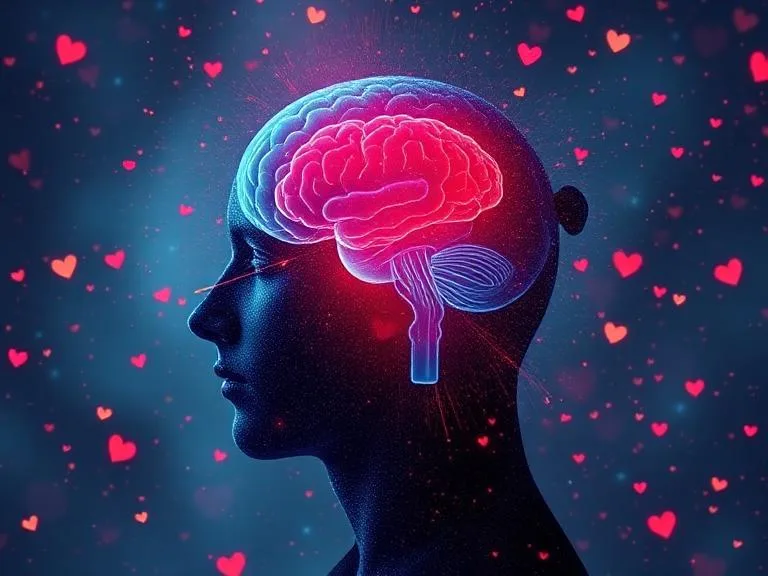
You’ve felt it. That exhilarating jolt when you meet someone new, the world suddenly imbued with a vibrant, almost unbearable intensity. Your palms sweat, your heart races, and you can’t stop thinking about them. It's not just butterflies; it's a full-blown neurochemical symphony orchestrating a profound transformation within your skull. So, what happens inside your brain when you fall in love? It's a complex, beautiful, and sometimes chaotic process driven by ancient biological programming.
The Initial Spark: Your Brain's Love Potion Cocktail
The first flush of love isn't merely an emotional experience; it's a powerful physiological takeover. Your brain kicks into overdrive, releasing a potent cocktail of neurochemicals that create that unmistakable feeling of infatuation. This isn't some gentle simmer; it’s a roaring bonfire. Think of it as nature's way of ensuring we pair up and, from an evolutionary perspective, procreate.
At the heart of this initial attraction are three main players:
- Dopamine: The Reward Seeker. This neurotransmitter is a crucial part of your brain's reward system. When you're falling in love, dopamine surges, particularly in areas like the ventral tegmental area (VTA) and the nucleus accumbens. It's the same chemical that gets released when you eat delicious food, win a game, or use certain addictive substances. It creates feelings of pleasure, motivation, and craving. That intense desire to be with your beloved, to know everything about them? That’s dopamine telling your brain, "More of this, please!"
- Norepinephrine: The Adrenaline Rush. Closely related to adrenaline, norepinephrine is responsible for the physical symptoms of early love. It’s why your heart pounds, your palms get sweaty, and you might feel a sudden burst of energy or even a loss of appetite. It sharpens your focus, making your beloved seem like the most interesting person in the room – or perhaps, the only person in the room.
- Serotonin: The Obsession Factor. This one's a bit of a paradox. While serotonin generally promotes feelings of well-being and happiness, studies have shown that levels of serotonin actually drop in the brains of people in the early stages of intense romantic love. This dip can contribute to the obsessive thoughts and anxieties often associated with new love, making you constantly wonder about your partner and their feelings.
The Serotonin Dip: Why Love Can Feel Like an Obsession
That feeling of being utterly consumed by thoughts of your new love isn't just poetic license; there's a biological basis. Dr. Helen Fisher, a renowned anthropologist and expert on the science of love, highlights the role of serotonin. Her research, using fMRI scans, has shown that people in early passionate love exhibit reduced serotonin transporter levels, similar to individuals with obsessive-compulsive disorder (OCD). It's a fascinating insight, isn't it? It suggests that love, in its initial stages, can hijack your brain's ability to regulate mood and focus, pushing your beloved to the forefront of your consciousness, almost against your will.
The Brain's Love Circuit: Key Regions in Action
It's not just about a few chemicals swimming around; specific brain regions light up like a Christmas tree when you're caught in love's embrace. These areas form a complex "love circuit" that coordinates the emotional and physical responses you experience.
- Ventral Tegmental Area (VTA) & Nucleus Accumbens: The Reward Centers. As mentioned, these are ground zero for dopamine production and reception. They're part of your brain's ancient reward system, driving you towards experiences that ensure survival and pleasure.
- Prefrontal Cortex: The Decision-Maker (Sort Of). While you might think falling in love is all about impulse, your prefrontal cortex, responsible for judgment and decision-making, also plays a role. However, in early love, activity in parts of the prefrontal cortex can actually decrease, which might explain why lovers often overlook flaws and see their partner through rose-tinted glasses. It's a temporary suspension of critical judgment, allowing for deeper bonding.
- Amygdala: The Fear Processor. Intriguingly, activity in the amygdala, your brain's fear center, also tends to decrease when you're in love. This reduction in fear and anxiety might contribute to the feeling of security and comfort you start to develop with your partner, making you feel safer and more open.
- Hippocampus: The Memory Builder. The hippocampus, crucial for memory formation, works overtime, helping you remember every detail of your early interactions, from the first touch to shared laughter. These memories become foundational to your developing relationship.
The Bonds That Bind: Oxytocin and Vasopressin for Lasting Love
While the initial rush of dopamine, norepinephrine, and serotonin creates the intoxicating high of infatuation, it's not sustainable long-term. Thankfully, your brain has another trick up its sleeve for moving from passionate love to enduring attachment. This is where the "cuddle hormones" come in.
- Oxytocin: The Bonding Agent. Often called the "love hormone" or "cuddle hormone," oxytocin is released during physical touch, intimacy, and sexual activity. It fosters feelings of trust, bonding, and attachment. It's what makes you feel close to your partner after sex, or what strengthens the bond between a mother and child. As relationships mature, oxytocin becomes central to the feeling of deep, comfortable connection and commitment.
- Vasopressin: The Commitment Enforcer. Less famous than oxytocin but equally vital, vasopressin plays a key role in long-term pair bonding and monogamy. Studies on prairie voles, known for their monogamous relationships, show that vasopressin receptors in the brain are critical for forming lasting pair bonds. In humans, it's thought to contribute to feelings of devotion and protectiveness towards a partner.
These two hormones work in concert to transition love from a burning inferno to a warm, steady flame. They help cement the deep emotional connection that allows relationships to thrive beyond the initial, adrenaline-fueled phase.
What This Means for Your Love Life
Understanding what happens inside your brain when you fall in love isn't just academic; it offers valuable insights into navigating the complexities of relationships. Here's what you can take away:
- Embrace the Ride: The initial infatuation phase, with its dopamine highs and serotonin dips, is intense. Recognize it for what it is – a powerful biological drive designed to get you hooked. Enjoy the euphoria, but also understand that the obsessive thoughts and blind spots are temporary.
- Expect the Transition: That fiery passion won't last forever, and that's perfectly normal and healthy. As your brain shifts from dopamine-fueled craving to oxytocin and vasopressin-driven attachment, love evolves. The intense "falling" feeling gives way to a deeper, more profound sense of connection, trust, and companionship. Don't mistake this shift for a loss of love; it's love maturing.
- Cultivate Connection: Knowing the role of oxytocin, you can actively foster it. Physical touch, shared experiences, open communication, and intimacy are all powerful ways to strengthen the bonds of attachment and keep the "love hormones" flowing, even years into a relationship.
- Manage Expectations: When the initial neurochemical haze lifts, you'll start seeing your partner more realistically. This is where true love begins – choosing to love and appreciate someone, flaws and all, rather than just being swept away by a chemical tide.
So, the next time you feel that peculiar pull, that undeniable connection, remember it’s not just your heart or your soul; it’s your incredible brain, orchestrating one of life's most profound and transformative experiences. It's a testament to our evolutionary journey, a biological imperative wrapped in the most beautiful of human emotions. From the first intoxicating glance to the quiet comfort of a shared lifetime, your brain is always at the helm, charting the course of love.