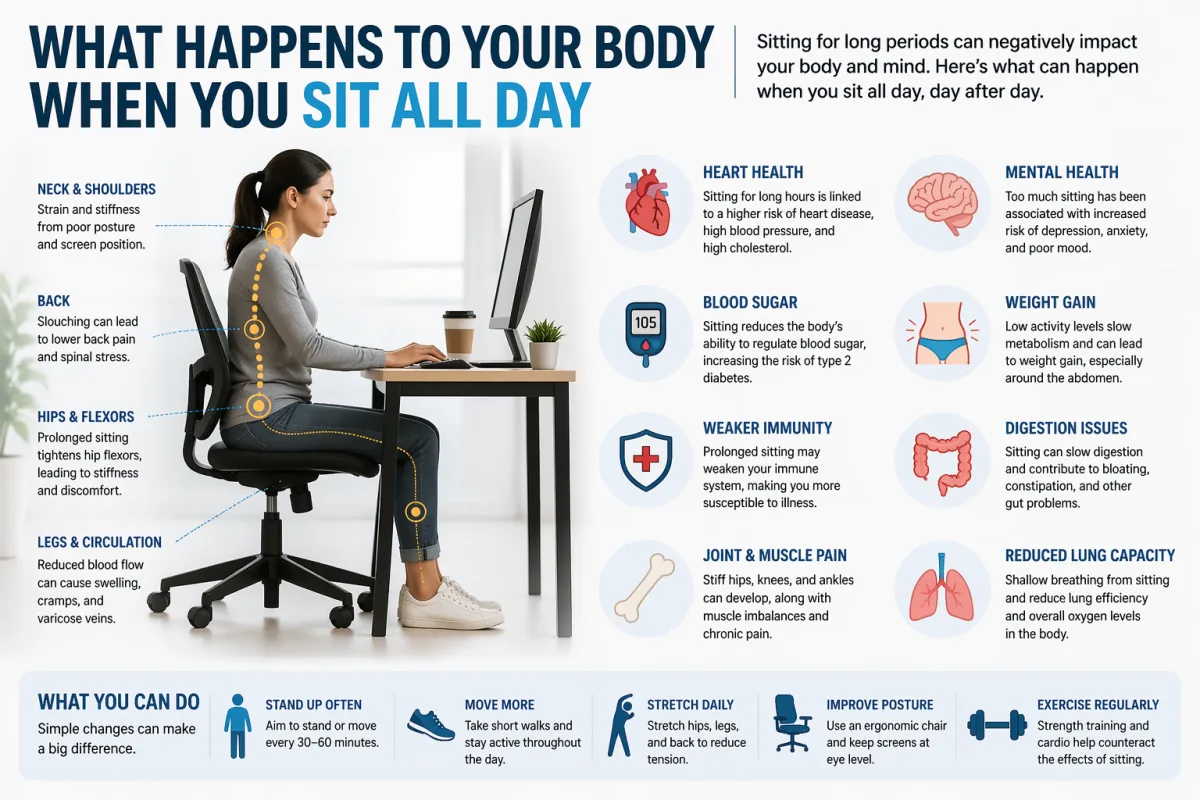
You commute, you work, you binge-watch. For many of us, sitting isn't just a part of life; it's practically a lifestyle. We're spending more hours glued to chairs than ever before, often without a second thought about the consequences. But what happens to your body when you sit all day, every day? The truth is, your seemingly innocuous chair might be silently orchestrating a range of alarming health issues, from stiff muscles to increased risks of chronic disease. It's time we pulled back the curtain on this modern epidemic.
The Silent Assault on Your Muscles and Spine
When you're constantly seated, your body adapts in ways that aren't doing you any favors. Think about it: your hip flexors shorten, becoming tight and less flexible, which can pull your pelvis forward and contribute to lower back pain. Your glutes, essential for posture and movement, literally "turn off" or weaken from disuse – a phenomenon some experts call "gluteal amnesia."
Your core muscles also suffer. They aren't engaged to support your spine when you're slumped in a chair, leading to a weaker midsection and greater susceptibility to injury. And let's not forget your neck and shoulders. Staring at a screen for hours causes you to hunch forward, straining these muscles, often resulting in tension headaches and chronic stiffness. It's a cascade of imbalances, all starting from that seemingly comfortable position.
What Happens to Your Body When You Sit All Day: Metabolic and Cardiovascular Risks
The impact of prolonged sitting extends far beyond musculoskeletal discomfort; it delves deep into your metabolic and cardiovascular systems. When you're sedentary, your body burns fewer calories, which can lead to weight gain. But it's not just about calories. Research shows that sitting for extended periods slows down your metabolism, affecting your body's ability to regulate blood sugar, blood pressure, and break down fat.
Your heart takes a hit, too. Studies have found that people who sit more have an increased risk of heart disease. For example, a 2010 study published in the American Journal of Epidemiology revealed that men who spent more than five hours a day sitting had a 34% increased risk of heart failure compared to those who sat for less than two hours. It's a stark reminder that our bodies are designed for movement, and denying them that comes with severe consequences. This isn't just about feeling sluggish; it's about the fundamental machinery of your health.
Beyond the Physical: Your Brain and Mood on the Couch
Think sitting only affects your body below the neck? Think again. Your brain and mental well-being are also deeply intertwined with your activity levels. Less physical activity means less blood flow to the brain, which can lead to reduced cognitive function, often manifesting as "brain fog" or difficulty concentrating. You might find yourself feeling less sharp, struggling to focus on tasks that once came easily.
But it doesn't stop there. Prolonged sitting has been linked to an increased risk of anxiety and depression. Movement helps release endorphins, natural mood elevators, and provides a crucial outlet for stress. When you're constantly stationary, you're missing out on these vital mental boosts. It's a vicious cycle: sitting leads to low mood, and low mood can make you less inclined to move.
The Grim Statistics: Chronic Disease and Early Mortality
The cumulative effects of a sedentary lifestyle are truly sobering. Research consistently links excessive sitting to higher risks of several chronic diseases, including type 2 diabetes and certain types of cancer. For instance, a meta-analysis published in the journal Diabetologia found that those who sit the most have a 112% increased risk of diabetes compared to those who sit the least.
And the most alarming statistic? Prolonged sitting is an independent risk factor for early mortality, even for those who exercise regularly. A 2018 study published in the Annals of Internal Medicine, which tracked nearly 8,000 adults, found that people who sat for more than 13 hours a day had a two-fold greater risk of death compared to those who sat for less than 6.5 hours, regardless of physical activity. It underscores a critical point: you can't simply "undo" 8+ hours of sitting with a 30-minute gym session. The damage is done throughout the day.
Reclaiming Your Health: Practical Steps to Combat Sedentary Living
The good news is you're not powerless against the health risks of sitting all day. Small, consistent changes can make a huge difference. The goal isn't to eliminate sitting entirely – that's often unrealistic – but to break up long periods of inactivity with movement.
Simple Desk-Side Interventions
- Stand Up Every 30 Minutes: Set a timer. When it goes off, stand up, stretch, and walk around for a minute or two. Even a quick trip to the water cooler or a few laps around your office can help.
- Invest in a Standing Desk: If your workplace allows, a standing desk is a game-changer. Alternate between sitting and standing throughout the day.
- Walk and Talk: Instead of sitting for meetings, suggest a walking meeting. For phone calls, stand up and pace.
- Take the Stairs: Skip the elevator whenever possible. Those extra steps add up.
- Stretch Regularly: Incorporate simple stretches into your day to counteract tightness in your hips, chest, and shoulders.
What this means for you is taking proactive control. It's about building movement into the fabric of your day, not just as a separate activity. Don't wait for your body to send you louder signals of discomfort or disease. Start small, stay consistent, and your body will thank you.
The evidence is clear: our bodies are not designed for the static existence many of us lead. Understanding what happens to your body when you sit all day is the first step toward making meaningful changes. It's not about achieving peak fitness overnight; it's about breaking the habit of prolonged stillness and integrating more natural movement into your life. Your long-term health, vitality, and even your mood depend on it. Don't let your chair dictate your well-being; stand up for your health.