Why I Finally Bought This Book
I have been tinkering with Arduino kits and basic circuits for a couple of years now. For a long time, I was totally fine just following online tutorials. I would plug a resistor here, an LED there, upload some code, and feel like a genius. But eventually, I hit a massive wall. I realized I didn't actually understand why my circuits worked. When I tried to design my own custom motorized prop for a Halloween display, I ended up frying a microcontroller because I didn't truly grasp voltage regulators.
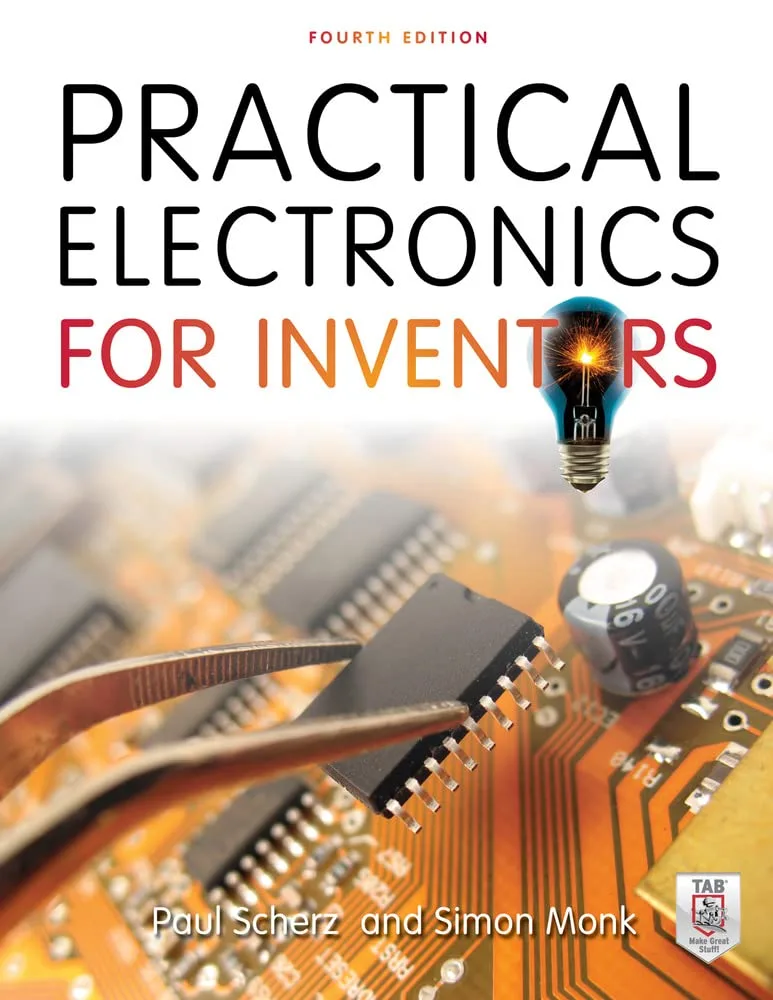
That is exactly what pushed me to buy Practical Electronics for Inventors, Fourth Edition. I kept seeing it recommended on hobbyist forums, so I decided to make it my main workbench reference. If you want to jump straight to the product page and skip my rambling, you can check today's price.
First Impressions: It's a Brick
When the package arrived, I was honestly shocked by the sheer size of this thing. At over 1,000 pages, it is less of a casual weekend read and more of a comprehensive encyclopedia. The paper is relatively thin to accommodate all that information, and the print is incredibly dense. At first glance, I felt a little intimidated just looking at it sitting on my desk.
What I Actually Liked
After a few weeks of using it to troubleshoot my own projects, I am genuinely impressed by how much ground Paul Scherz and Simon Monk cover.
- The perfect blend of theory and practice: The authors do a fantastic job explaining dry concepts like Ohm's law, capacitive reactance, and semiconductor physics without putting you to sleep. They always tie the math back to real-world applications so you know why you are learning it.
- Excellent component breakdown: There are massive sections dedicated entirely to specific components. I finally understand how to read the cryptic markings on ceramic capacitors and how to choose the correct inductor for a power supply instead of just guessing.
- Great visual aids: The book is absolutely packed with hand-drawn style schematics, graphs, and oscilloscope readouts. I found the section on reading complex schematics incredibly helpful. It finally demystified all those weird symbols I kept seeing on open-source hardware repositories.
- The modern updates: Simon Monk's influence in this fourth edition is obvious. The chapters on microcontrollers, Arduino, and basic programmable logic bridge the gap between old-school analog electronics and modern digital making perfectly.
What Annoyed Me
No product is perfect, and a book this massive definitely has a few flaws that bugged me during my time with it.
First off, the physical quality of the paperback binding is frustrating. Because the book is so thick, the spine takes an absolute beating if you lay it flat on your workbench while you solder. After just a month of regular use, my cover is curling and the spine is heavily creased. I desperately wish they offered a spiral-bound version so it would lay completely flat. If you are curious about the different formats available or want to see what others paid, you can check the Amazon listing.
Secondly, while the book claims to be accessible for beginners, the math gets very heavy, very fast. If you hate algebra or struggle with basic physics, Chapter 2 is going to feel like a brick wall. You don't have to do all the math to get value out of the book, but the early chapters can be overwhelming.
Finally, I noticed a handful of minor typos in some of the circuit diagrams. It is nothing deal-breaking, but if you are a novice trying to troubleshoot why your breadboard build isn't working, a mislabeled resistor value in a diagram can drive you crazy.
Who Should Buy This
- Intermediate Makers: If you want to move past copy-pasting code and blindly wiring breadboards, this is your bible.
- Engineering Students: It makes a phenomenal, practical companion to the incredibly dry academic textbooks you get in college.
- Serious Hobbyists: Anyone who wants a single, comprehensive reference book sitting right next to their soldering iron.
Who Should Skip It
- Absolute Beginners: If you have never stripped a wire or touched a battery terminal, start with a basic, hands-on starter kit manual instead. This book will probably scare you off.
- Project Hunters: If you are looking for a quick, step-by-step recipe book of 50 pre-made projects, look elsewhere. This teaches you how to invent; it doesn't do the inventing for you.
Final Verdict
Overall, I am thrilled I bought this. It has permanently replaced about five different, smaller reference guides on my shelf. When I get stuck on a circuit design now, this is the first place I look instead of endlessly scrolling through unverified forum posts online. It is not perfect, and I really wish the physical binding was more durable, but the sheer volume of practical knowledge inside is unmatched. If you are serious about understanding how circuits actually work, I highly recommend you pick one up here.