My Honest Take on Charles Platt's Electronics Encyclopedia
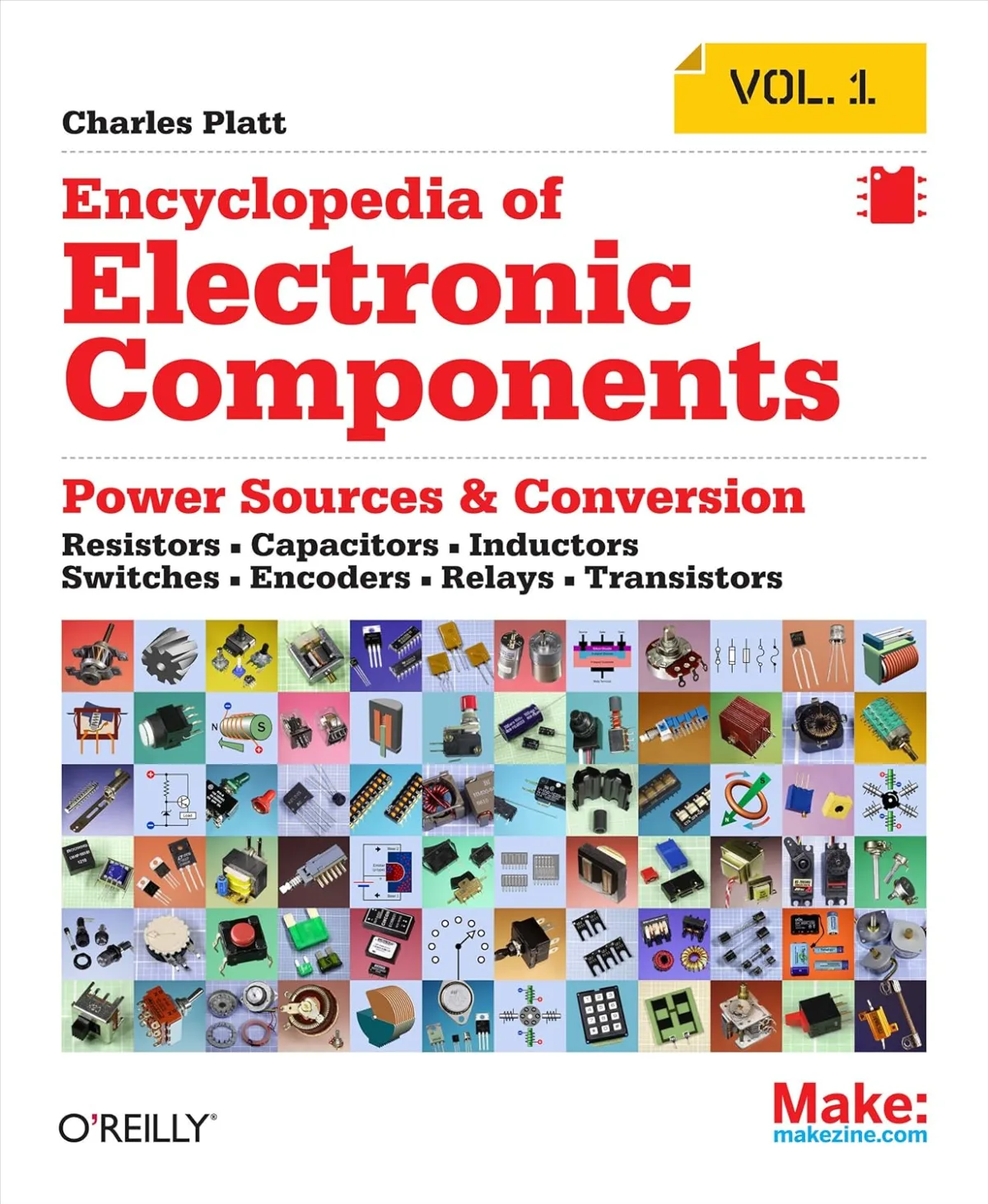
I’ve been tinkering with Arduino kits and building basic guitar pedals for a couple of years now. But honestly? I was just painting by numbers. I knew where to put a 10k resistor on my breadboard because a tutorial told me to, but I didn't really understand why it had to be there. I kept searching forums for basic explanations and getting hit with walls of dense calculus from electrical engineers. That’s when I decided to check today's price on Charles Platt’s Encyclopedia of Electronic Components Volume 1 and ordered a copy for my workbench.
After a few weeks of keeping it open right next to my soldering iron, I have some strong opinions on who this book is actually for.
First Impressions and Layout
The book arrived, and it was thicker and heavier than I expected. Flipping through it, I was immediately struck by the visuals. This isn't a dry university textbook. It’s full of high-quality, full-color photographs and clear schematic diagrams. You aren't just looking at abstract squiggles; you see actual photos of what the components look like in real life.
Every component gets a dedicated section broken down into incredibly logical categories: What it does, How it works, Variants, and Values. It makes finding specific information incredibly fast. When I was trying to figure out the difference between a ceramic and electrolytic capacitor for an audio circuit, Platt’s explanation was exactly what I needed. He tells you practically what the component does in a circuit without bogging you down in quantum physics.
The Best Part: The "What Can Go Wrong" Section
My absolute favorite feature of this book is the "What Can Go Wrong" section included for nearly every component. If you're a hobbyist, you know the pain of releasing the "magic smoke" from a part because you wired it backward. Platt actually walks you through the common ways you will accidentally destroy your components.
For example, I kept blowing through my stash of bipolar transistors while trying to build a simple motor-driver circuit. I opened the encyclopedia, went to the transistor section, and read the exact mistake I was making with my base current. It saved me a ton of frustration. If you want to see what others paid for that kind of troubleshooting peace of mind, you can check the reviews, but for me, it paid for itself that afternoon.
What Annoyed Me
But it isn't perfect. The biggest annoyance is right there in the title: it's Volume 1. It covers power, electromagnetism, and discrete semiconductors (resistors, capacitors, inductors, switches, relays, transistors). If you want to look up LEDs, timers, op-amps, or logic gates, you’re out of luck until you buy Volume 2 or 3. It feels a bit like a fractured reference library. Sometimes I just want one giant book that covers everything.
Also, the index can be surprisingly frustrating. A few times I tried looking up a specific term I knew was in the book, only to find it buried under a weird parent category or missing from the back pages entirely. You kind of have to learn how the author categorizes things to find them quickly.
Pros and Cons
Here is a quick breakdown of my experience:
- Pro: Extremely visual with full-color photos and diagrams.
- Pro: Focuses on practical application rather than heavy math.
- Pro: The "What Can Go Wrong" sections are absolute lifesavers for beginners.
- Con: It's only Volume 1, so you'll eventually need to buy the other books for a complete reference library.
- Con: The index could be organized much better for quick lookups.
Who Should Buy This
If you are a hobbyist, a maker, an Arduino fan, or a student who learns better by doing than by reading equations, this book is a massive help. It bridges the gap between basic tutorials and advanced engineering texts perfectly. It's also fantastic for visual learners who need to see what a component looks like before they try to use it.
Who Should Skip It
If you are an electrical engineering major looking for deep mathematical breakdowns of circuit behavior, this is way too basic for you. You won't find complex formulas or deep dives into semiconductor physics here. Also, if you exclusively work with digital logic and integrated circuits, you'll want to skip straight to the later volumes.
The Final Verdict
Despite my gripes about the index and it being split into multiple volumes, this book has earned a permanent spot on my workbench. It’s practical, easy to read, and genuinely helpful when you are stuck on a breadboard project. If you are tired of pausing your projects to search the internet for basic component functions, I highly recommend you grab it on Amazon and keep it handy. It’s a reference book you will actually enjoy reading.