The Great Missing Cord Dilemma
If you are anything like me, you have a infamous "cable drawer" in your house. It is a tangled graveyard of black wires, charging bricks, and mystery cords. Yet somehow, whenever I pull an old piece of electronics out of the closet, the specific power cable it needs is nowhere to be found. This exact scenario happened to me last month with my trusty old Brother label maker and a set of desktop speakers I wanted to set up in the garage.
Instead of spending twenty dollars buying two separate proprietary cords, I started looking for a universal solution. That is when I stumbled across this little gadget. If you want to check today's price, you can find the exact model I bought right there. I figured I would give it a shot, test it on a few different devices, and see if it actually works without frying my electronics.
First Impressions and Build Quality
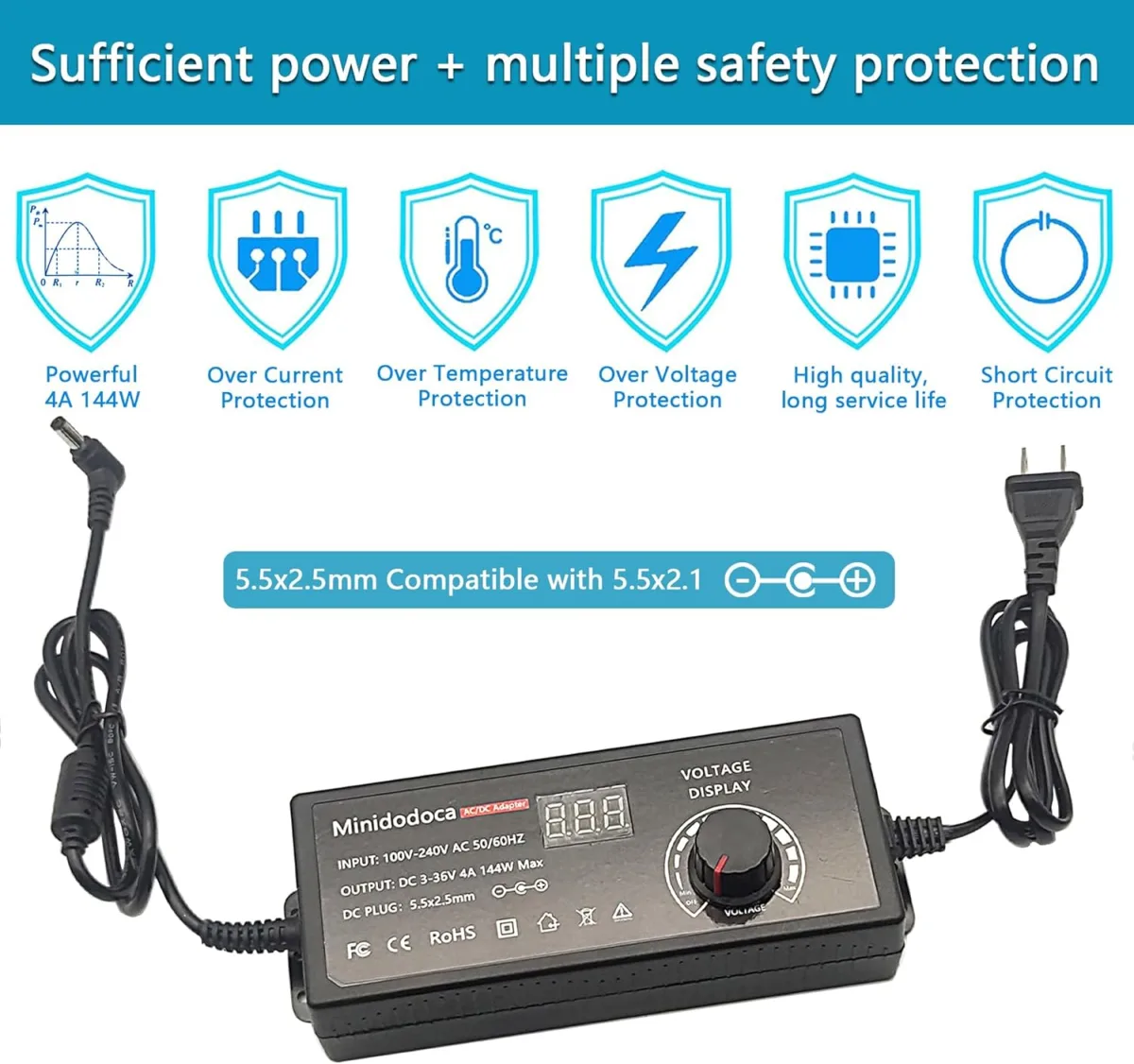
When the box arrived, I was surprised by how compact it was. Inside, you get the main power brick attached to the wall plug, a strip containing a bunch of different interchangeable adapter tips, and a tiny plastic key. The plastic key is incredibly important. You use it to turn the little dial on the front of the adapter to select your required voltage.
The build quality is completely fine. It does not feel like a premium, heavy Apple product, but it does not feel like cheap, hollow junk either. The plastic housing is sturdy enough to survive getting kicked around under a desk. The interchangeable tips snap onto the main cable with a firm, satisfying click. I tried pulling them apart with moderate force, and they held together perfectly, which gave me some peace of mind that they would not just fall out while I was using them.
Putting It to the Test
My first target was the label maker. I looked at the back of the device and saw it required 9V. I took the little plastic key, turned the dial on the Minidodoca adapter to the 9V slot, and felt a very distinct click. I really appreciate that it clicks firmly into place. You definitely do not want this dial slipping between voltages and sending 12V to a 5V device.
Next, I had to find the right tip. I just lined up the original port on the label maker with the row of included tips until I found the match. I plugged it in, hit the power button, and the label maker booted right up. No weird buzzing noises from the power brick, no overheating. It just worked.
I repeated the process with my old desktop speakers, which needed 12V. Again, I swapped the tip, turned the dial, and had music playing in minutes. The sheer convenience of fixing two problems with one purchase was incredibly satisfying.
What Annoyed Me
While I am mostly happy with it, there are a few drawbacks you should know about before you decide to grab it on Amazon.
First, the cord length is just okay. It measures around 4 to 5 feet. If your wall outlet is far away from the device you are trying to power, you are going to need an extension cord. Second, the adapter block itself is a bit wide. If you plug it into a standard power strip, it is absolutely going to block the outlet next to it. You will have to put it on the very end of the strip to avoid wasting space.
Finally, you have to be careful with polarity. This adapter is center-positive. Most modern electronics are center-positive, but some music equipment (like guitar pedals) are center-negative. If you plug this into a center-negative device without a polarity reverser cable, you will ruin your equipment. Always check the little diagram on your device first.
Who Should Buy This
- People who frequently buy electronics from thrift stores or yard sales without cords.
- Anyone looking to consolidate their messy cable drawer into one versatile tool.
- Parents who constantly lose the charging cables for their kids' electronic toys.
- DIY tinkerers who need a bench power supply for testing small gadgets.
Who Should Skip It
- Musicians looking to power guitar pedals (due to the center-positive polarity).
- People powering high-draw devices like large laptops or heavy machinery (this tops out at 30W).
- Anyone who easily loses small parts, as losing the tiny voltage key makes this hard to adjust.
Final Verdict
After a few weeks of using this universal adapter around the house, I am genuinely impressed. It saved me the headache of hunting down obscure replacement cords and has worked flawlessly on everything from a router to a baby monitor. Just remember to double-check your device's voltage and polarity before plugging it in. If you are tired of dealing with missing power supplies, I highly recommend picking this up. You can see what others paid and read more user experiences to decide if it is the right fit for your setup.